Last updated: July 2026 · Reviewed against A.O. Smith and Rheem operating instructions
To turn up the temperature on your water heater, find the thermostat dial (gas) or the thermostats behind the access panels (electric) and raise the setting. The U.S. Department of Energy recommends 120°F as the sweet spot — hot enough for comfort and safety, low enough to save energy and prevent scalding. Here is how to adjust it on both types safely.
What Temperature Should It Be?
120°F is the recommended setting for most homes. Going higher (up to 140°F) gives more hot water and kills bacteria like Legionella, but increases scald risk and energy use — every 10°F higher adds a few percent to your bill. Below 120°F saves energy but can allow bacteria to grow. If you have young children or elderly household members, 120°F also reduces the risk of scalding burns.
Turning Up a Gas Water Heater
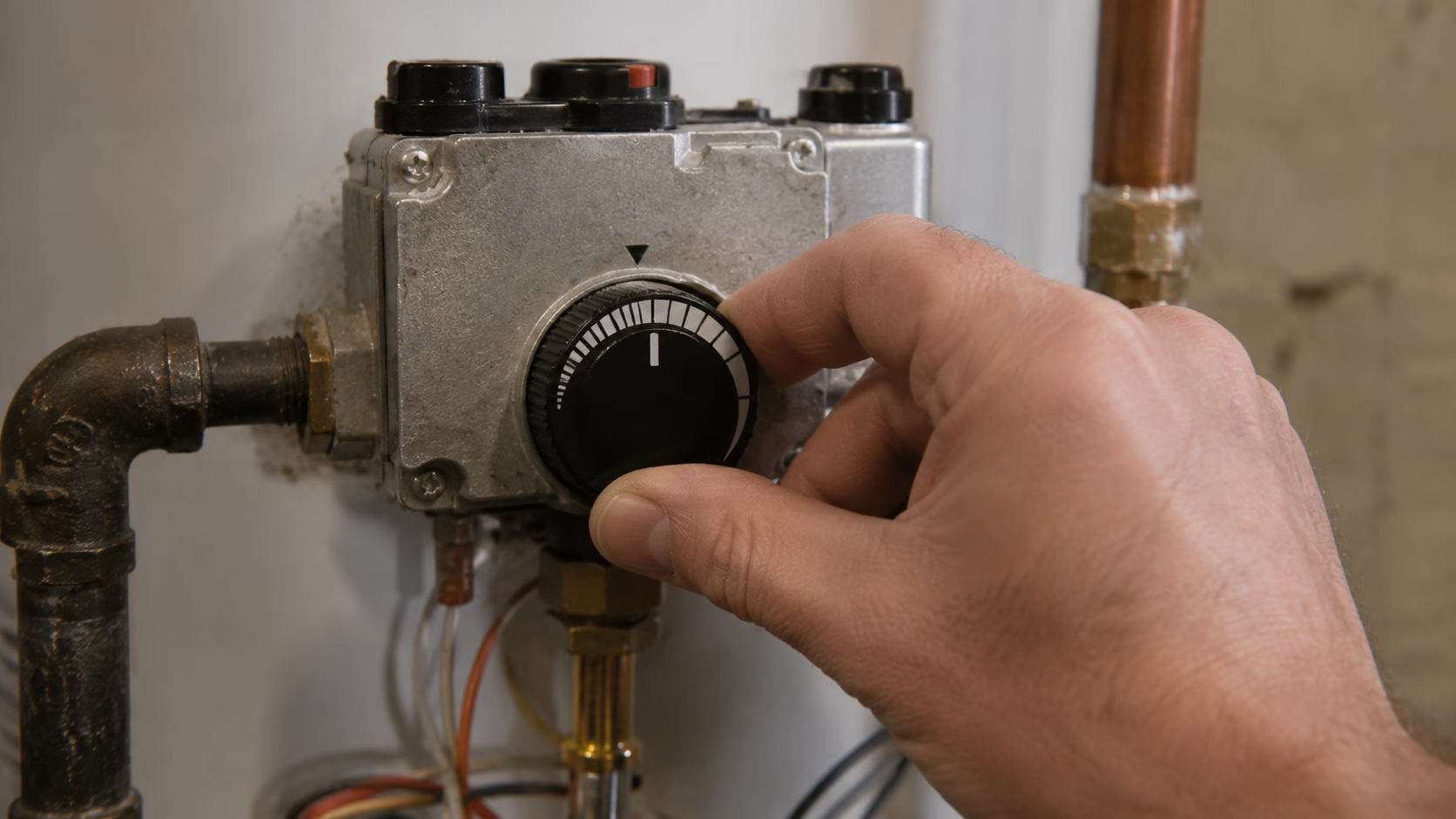
Gas heaters are simple: find the temperature dial on the gas control valve near the bottom of the tank. It usually has markings (like Warm, A, B, C, Hot, or a numbered dial) rather than exact degrees. Turn it up gradually — a quarter turn — wait a few hours, and test the water temperature at a tap with a thermometer. Adjust again if needed. Most dials’ midpoint is roughly 120°F.
Turning Up an Electric Water Heater
Electric heaters have two thermostats behind access panels — one for the upper element, one for the lower. To change the temperature:
- Turn off the breaker to the water heater first — there is live 240V behind the panels.
- Remove both access panel covers and fold back the insulation.
- Use a flathead screwdriver to set each thermostat dial to the same temperature (both must match).
- Replace insulation and covers, restore power, and test at a tap after a few hours.
⚠️ Always turn off the breaker before opening an electric water heater’s panels — the thermostats sit right next to live 240-volt terminals.
If Turning It Up Doesn’t Help
If you raised the temperature but still do not get hotter water, the problem is not the setting. Common causes: a failed heating element or thermostat (electric), sediment reducing capacity, or a failing gas control. See our guides on no hot water and, if the water runs out fast, sediment buildup — which a tank flush addresses.
FAQ
What temperature should a water heater be set to?
120°F is the recommended setting — comfortable, energy-efficient, and safe from scalding. Some households raise it to 140°F for more hot water or to kill bacteria, at the cost of higher energy use and scald risk.
How do I make my water heater hotter?
On gas units, turn up the dial on the gas control valve gradually and test after a few hours. On electric units, turn off the breaker, then set both thermostats (upper and lower) to the same higher temperature behind the access panels.
Why is my water not hot enough even after turning it up?
If raising the setting does not help, suspect a failed heating element or thermostat on electric units, heavy sediment reducing capacity, or a faulty gas control. Turning the dial does nothing if the component that heats the water has failed.
Sources: U.S. Department of Energy — Water Heating · manufacturer service documentation (A.O. Smith, Rheem, Bradford White).