Last updated: July 2026 · Reviewed against A.O. Smith, Rheem and Bradford White service documentation
A water heater leaking from the drain valve is one of the most common and least expensive water heater leaks to fix — often for under $15. The drain valve is the spigot at the base of the tank used to flush sediment, and because most factory valves are made of cheap plastic, they are prone to dripping, failing to seal after a flush, or slowly weeping with age. The key thing to know up front: a leak from the valve is a simple repair, but you must be sure the water is actually coming from the valve and not from the base of the tank itself, which is a far more serious problem. This guide shows you how to tell the difference and fix the valve.
First: Confirm It Is the Valve, Not the Tank
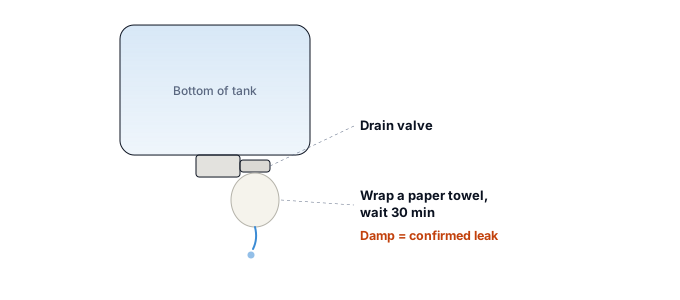
Because both a drain valve leak and a corroded tank produce water at the base of the heater, you need to pinpoint the source before doing anything. Dry the valve and the surrounding area completely with a towel or paper towel, then watch closely. If water reappears at the valve’s spout or where it threads into the tank, the valve is your culprit — good news, it is a cheap fix. If water instead seeps from the bottom seam of the tank itself, the tank has corroded through and needs replacing. When in doubt, wrap a dry paper towel around the valve and check where it gets wet first. See why your water heater is leaking for the full source-finding method.
Why Drain Valves Leak
- It was not fully closed: after a flush, the valve may not have reseated. This is the easiest fix — just close it fully.
- Debris under the seat: sediment lodged in the valve prevents it from sealing. Opening and closing it briefly can flush the debris out.
- Cracked or worn plastic valve: the cheap factory plastic valves become brittle and crack, or their washers fail with age.
- Loose valve: the valve has loosened where it threads into the tank.
The Quick Fixes to Try First
Before replacing anything, try these in order. First, make sure the valve is fully closed — turn the handle clockwise firmly (but do not force it). Second, if it still drips, place a bucket underneath and briefly open the valve to flush out any sediment caught under the seat, then close it again; this often reseals it. Third, if the valve has a threaded outlet, a garden-hose cap tightened onto the end can stop a minor weep as a temporary measure. If none of these work, the valve needs replacing.
How to Replace the Drain Valve
- Turn off the power or gas, and shut off the cold water supply. See how to turn off your water heater.
- Connect a hose to the drain valve and drain the tank completely (open a hot tap to speed it).
- Once empty, unscrew the old valve counterclockwise. Some are threaded, some have a flange.
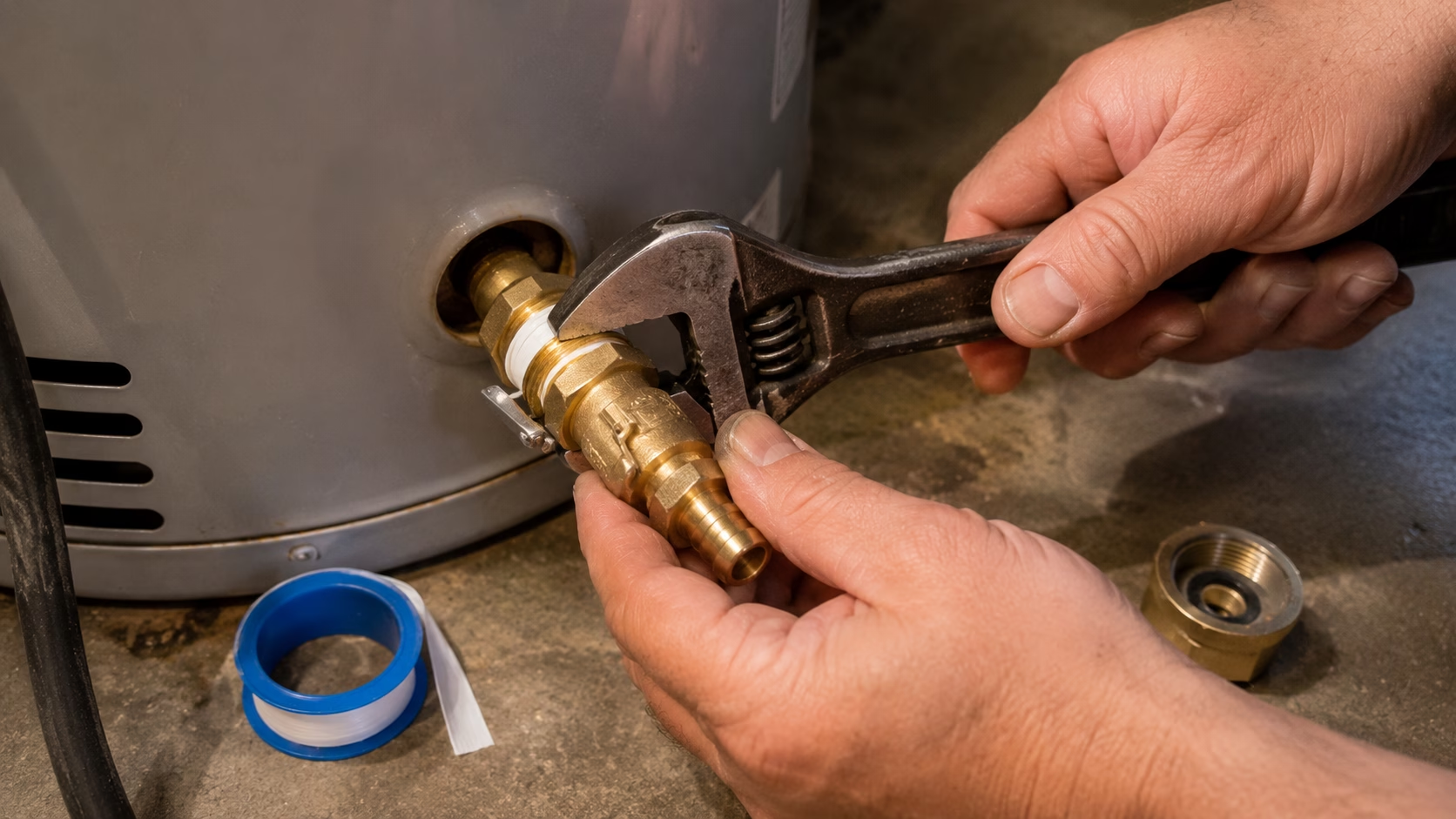
- Wrap the threads of the new valve with PTFE tape. A brass valve ($8–$15) is strongly recommended over plastic — it seals better and lasts far longer.
- Screw in the new valve, hand-tight plus a turn with a wrench. Do not overtighten.
- Close the valve, remove the hose, reopen the cold supply, and let the tank refill (open a hot tap to release air).
- Check for leaks, then restore power or gas once the tank is completely full.
⚠️ Never restore power to an electric water heater until the tank is completely full. Dry-firing burns out the heating elements in seconds.
Upgrade to a Brass Valve
If you are replacing the valve, spend the extra few dollars on a brass ball valve rather than another plastic one. The factory plastic valves are the reason so many water heaters develop this leak in the first place — they crack, warp under heat, and fail to reseal after flushing. A brass valve costs only $8–$15, seals reliably, and makes future annual flushing far easier. It is one of the cheapest worthwhile upgrades you can make to a water heater.
When to Call a Plumber
This is a DIY-friendly repair for most homeowners, but call a plumber if: the valve is seized and will not unscrew, the leak turns out to be from the tank body rather than the valve, or you are not comfortable draining and refilling the tank. Also weigh the tank’s age — if it is 10+ years old, a plumber may point out that a valve leak on an aging tank is a reasonable moment to plan a replacement.
FAQ
Why is my water heater leaking from the drain valve?
Usually the valve was not fully closed after a flush, has sediment lodged under the seat, or the cheap plastic valve has cracked or worn out. Try fully closing it and flushing out debris first; if it still leaks, replace it with a brass valve for $8–$15.
Can I fix a leaking drain valve without draining the tank?
For minor drips, yes — fully closing the valve, flushing out debris, or capping a threaded outlet may stop it without draining. But to actually replace the valve, you must drain the tank first. The quick fixes are worth trying before committing to a replacement.
Should I replace a plastic drain valve with brass?
Yes. Plastic factory valves are the most common reason for drain valve leaks — they crack and fail to reseal. A brass ball valve costs only a few dollars more, seals reliably, and makes future flushing easier. It is a worthwhile upgrade whenever you replace the valve.
Sources: U.S. Department of Energy — Water Heating · manufacturer service documentation (A.O. Smith, Rheem, Bradford White).