Last updated: July 2026 · Reviewed against Carrier, Goodman and Trane service documentation
The furnace limit switch is a safety device that shuts off the burners if the furnace overheats — and when it fails or trips repeatedly, it is a common reason a furnace short cycles, blows cold air, or stops heating. The good news: most limit switch problems trace back to restricted airflow, which is a cheap and often DIY fix. Here is how the switch works, why it trips, and how to tell if it has actually failed.
What the Limit Switch Does
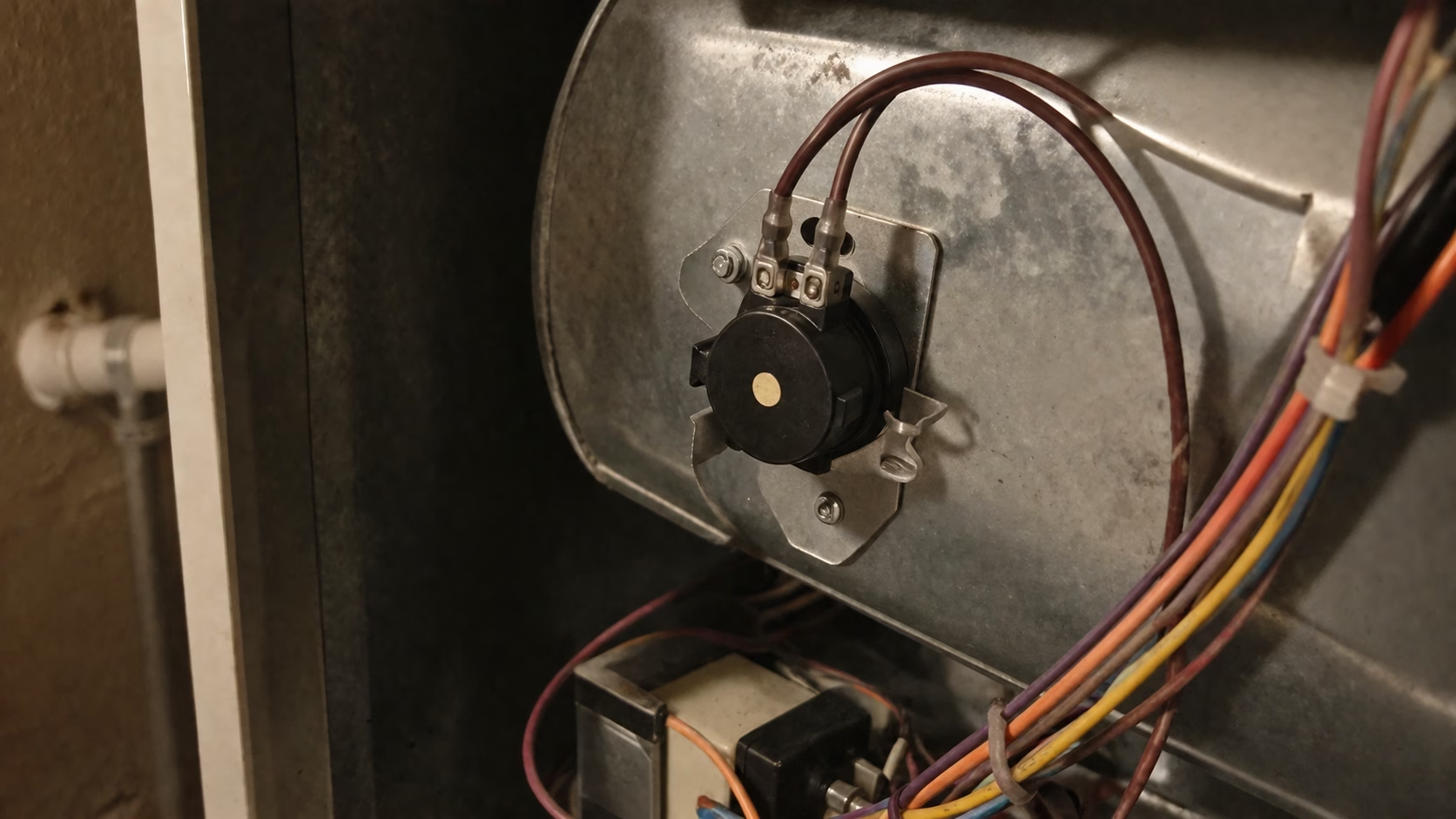
The high-limit switch sits on the furnace’s heat exchanger or in the plenum and monitors temperature. It has two jobs: it turns the blower on once the furnace is warm, and — critically — it shuts off the burners if the temperature climbs too high, preventing the heat exchanger from overheating and cracking. It is a safety cutoff, so when it acts up, the furnace stops making heat by design.
Why a Limit Switch Trips
Most of the time, a tripping limit switch is doing its job correctly — it is responding to real overheating caused by restricted airflow. The usual culprits:
- Dirty air filter: the number one cause. Restricted airflow lets heat build up. Replace it first.
- Blocked vents or ducts: closed registers, blocked returns, or dirty ducts choke airflow.
- Dirty blower: a grimy blower wheel moves less air.
- Closed or undersized ductwork: too many closed vents create back pressure.
This is the same overheating chain behind furnace short cycling and blowing cold air — the limit switch is often the component doing the shutting off.
When the Switch Itself Has Failed
Less often, the switch itself fails — stuck open (furnace will not fire at all) or stuck closed (fails to shut off on overheating, a safety risk). Signs of a genuinely bad switch: the furnace will not run even with a clean filter and clear airflow, or an error code specifically points to the limit switch. Testing it requires a multimeter to check continuity; a replacement switch costs $15–$50 for the part.
How to Troubleshoot It
- Replace the air filter — this resolves the majority of limit switch trips.
- Open and unblock all vents and returns, and make sure nothing is restricting airflow.
- Cycle the power to reset the furnace after clearing the airflow issue.
- Check for an error code — a limit switch fault is often flagged.
- If it still trips with good airflow, the switch or the blower likely needs professional attention.
⚠️ Never bypass or jump a limit switch to keep the furnace running. It exists to prevent the heat exchanger from overheating and cracking — which can release carbon monoxide. Fix the cause, do not defeat the safety.
When to Call a Pro
Call a technician if the limit switch trips even with a clean filter and clear airflow, if the furnace will not run at all and a code points to the limit switch, or if you are not comfortable testing electrical components. Never disable the switch as a workaround — it is protecting you from a cracked heat exchanger.
FAQ
What are the signs of a bad furnace limit switch?
The furnace short cycling (burners shutting off then restarting), the blower running constantly, or the furnace not firing at all even with a clean filter. But most “bad limit switch” symptoms are actually the switch correctly responding to overheating from a dirty filter or blocked airflow.
Why does my furnace limit switch keep tripping?
Almost always restricted airflow causing real overheating — most often a dirty air filter, followed by blocked vents, a dirty blower, or closed ductwork. Replace the filter and clear airflow first; the switch itself fails far less often than people assume.
Can I replace a furnace limit switch myself?
It is possible for a confident DIYer — the part is $15–$50 and it is a couple of wires and screws — but you must first confirm the switch is actually bad (not just responding to airflow problems) and work safely with the power off. Many homeowners have a technician confirm and replace it.
Sources: U.S. Department of Energy — Home Heating Systems · manufacturer service manuals (Carrier, Goodman, Trane).