Last updated: July 2026 · Reviewed against HVAC identification guidelines
The easiest way to tell if you have a heat pump: turn on the heat, then go check the outdoor unit. If the outdoor unit runs in winter when you are heating the home, you have a heat pump. If it only runs in summer for cooling, you have a furnace or AC. A heat pump looks almost identical to an air conditioner outside — the difference is that it runs year-round. Here are all the ways to know for sure.
The Quick Test: Does It Run in Winter?
This is the definitive check. Set your thermostat to HEAT and turn the temperature up. Go outside to the condenser unit (the big box that looks like an AC). If it kicks on and runs while you are heating the house, it is a heat pump — an air conditioner never runs in heating mode. If it stays off and only your indoor furnace makes heat, you have a furnace.
Check the Thermostat
Look at your thermostat settings. A tell-tale sign of a heat pump is an “EM HEAT” or “Emergency Heat” setting — only heat pumps have this (it switches to backup electric heat). If your thermostat has an Emergency Heat or Auxiliary Heat option, you almost certainly have a heat pump.
Check the Outdoor Unit’s Label
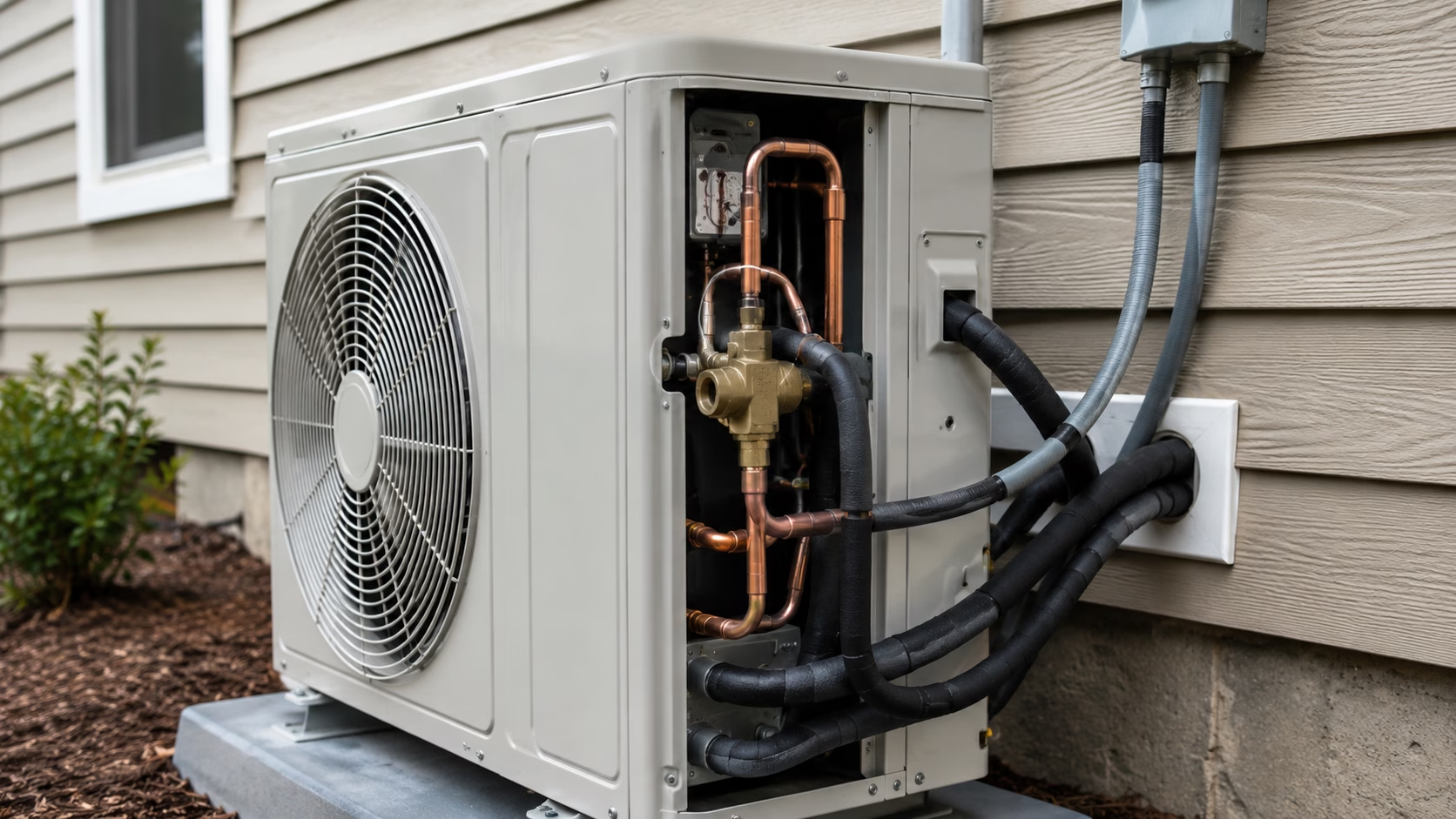
Find the model and serial number label on the outdoor unit. Look up the model number, or check the nomenclature: many manufacturers include “heat pump” or a code like “HP” in the model number. You can also look for a reversing valve — a brass component with a solenoid on top, visible on the refrigerant lines. Only heat pumps have one, because it is what lets them reverse between heating and cooling.
Other Clues
- No gas line or gas meter usage in winter: if your home has no gas furnace and stays warm, heat likely comes from a heat pump.
- The outdoor unit occasionally steams or defrosts in winter: heat pumps run defrost cycles; ACs never do because they do not run in winter.
- Air from the vents is warm but not hot: heat pump air is cooler (85–95°F) than furnace air (120°F+).
Why It Matters
Knowing which system you have changes how you troubleshoot and maintain it. Heat pumps need different care (year-round maintenance, defrost checks) and behave differently — for example, cooler vent air and occasional cold-air defrost cycles are normal. If yours is not heating, the diagnosis differs from a furnace; see heat pump not heating.
FAQ
How do I know if I have a heat pump or a furnace?
Turn on the heat and check the outdoor unit. If it runs while heating the home, it is a heat pump; if only the indoor unit makes heat and the outdoor box stays off, it is a furnace. An “Emergency Heat” setting on the thermostat also indicates a heat pump.
Does a heat pump look different from an air conditioner?
Not really — they look nearly identical outside. The difference is a heat pump has a reversing valve (a brass component with a solenoid on the refrigerant lines) and runs year-round, while an AC only runs for cooling in warm months.
Does an “Emergency Heat” setting mean I have a heat pump?
Yes. Only heat pumps have an Emergency Heat or Auxiliary Heat setting, because it switches the system to backup electric heat when the heat pump cannot keep up. A furnace-and-AC system does not have this setting.
Sources: U.S. Department of Energy — Heat Pump Systems · manufacturer documentation (Carrier, Goodman, Mitsubishi).