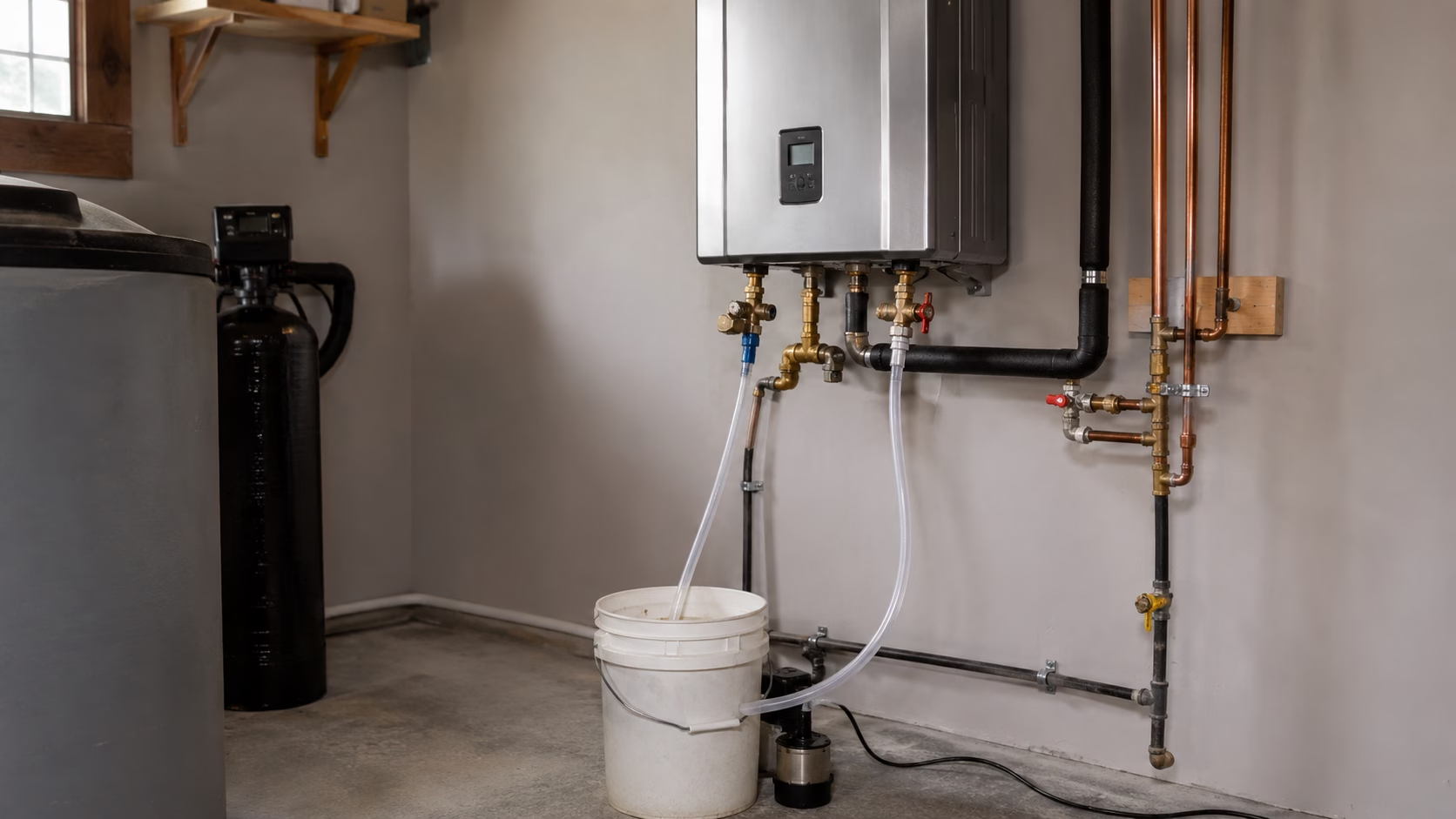
Last updated: July 2026 · Reviewed against Rinnai, Navien and Noritz maintenance guidelines
Tankless water heaters need one thing tank heaters do not: annual descaling. Hard water leaves mineral scale inside the heat exchanger, and left alone it kills efficiency and eventually the unit — which is why manufacturers require documented maintenance to keep the warranty valid. The good news: flushing a tankless unit is a DIY job you can do in about an hour with a $150 kit you reuse every year. Here is the full maintenance routine.
Why Tankless Maintenance Is Not Optional
A tankless heater fires a burner against a compact heat exchanger to heat water on demand. Every gallon leaves behind minerals — and in hard water areas, scale builds fast. Scale insulates the exchanger, so the unit burns more fuel for less hot water, error codes start appearing, and eventually the exchanger fails — a repair that can cost more than the unit is worth. Descaling once a year (twice in very hard water) prevents all of it.
The Annual Descaling Flush
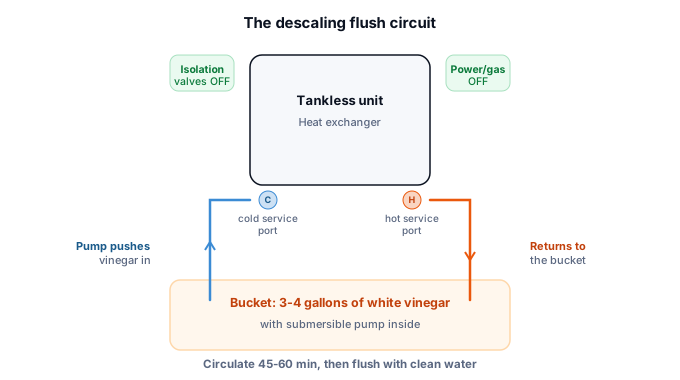
You will need: a descaling kit (submersible pump, two hoses, bucket — about $100–$180, reusable) and 3–4 gallons of white vinegar or a commercial descaler.
- Turn off the power (or gas) to the unit and shut the hot and cold isolation valves.
- Connect hoses to the service ports: pump-to-cold-in, hot-out-back-to-bucket.
- Fill the bucket with vinegar, submerge the pump, open the service valves.
- Run the pump to circulate vinegar through the exchanger for 45–60 minutes.
- Drain the vinegar, then flush with clean water for 5–10 minutes.
- Close service valves, reopen the isolation valves, restore power, and check for leaks.
If your unit has no isolation/service valves installed, a plumber will need to add them (a one-time job) before it can be flushed.
Clean the Inlet Filter
Every tankless unit has a small cold-water inlet screen that traps sediment. Once or twice a year, shut off the water, unscrew the filter, rinse it clean, and reinstall it. A clogged inlet filter reduces flow and can trigger error codes that look like bigger problems.
Other Annual Checks
- Air intake and exhaust vents: check for blockage, nests, or debris.
- Burner and flame: should be blue and steady; yellow or sooty means a combustion problem — call a pro.
- Water softener: in hard water areas, a softener dramatically reduces scaling and descaling frequency.
- Error code history: many units log codes — recurring ones point to developing issues.
Maintenance Schedule
| Frequency | Task |
|---|---|
| Annually (or 2x in hard water) | Descaling flush with vinegar |
| 1–2x per year | Clean the cold inlet filter screen |
| Annually | Check vents, flame, and error history |
| Every few years | Professional inspection and combustion check |
DIY vs. Professional Service
Descaling is genuinely DIY-friendly — the kit pays for itself after one use, since a professional flush runs $150–$300. Hire a pro for the initial installation of service valves, combustion testing, or any error code involving the gas valve or exchanger. See tankless water heater service and repair for common faults.
FAQ
How often should a tankless water heater be flushed?
Once a year in most homes, or twice a year in hard water areas. Some manufacturers require documented annual descaling to keep the warranty valid, so check your manual — skipping it can void coverage on an expensive unit.
Can I flush a tankless water heater myself?
Yes. With a $100–$180 descaling kit (reusable) and white vinegar, the job takes about an hour. The only requirement is that your unit has isolation/service valves installed — if it does not, have a plumber add them once.
What happens if you never descale a tankless water heater?
Scale builds inside the heat exchanger, cutting efficiency and hot water output, triggering error codes, and eventually damaging the exchanger — a repair often costing more than replacement. It can also void your warranty.
Sources: U.S. Department of Energy — Tankless Water Heaters · manufacturer maintenance guidelines (Rinnai, Navien, Noritz).