Last updated: July 2026 · Reviewed against A.O. Smith and Rheem service documentation
Flushing your water heater once a year removes the sediment that collects at the bottom of the tank — the stuff behind rumbling noises, lost capacity, and premature tank failure. It takes about an hour, needs nothing but a garden hose, and is one of the few maintenance jobs that measurably extends the life of the unit. Here is how to do it step by step.
Why Sediment Matters
Minerals in your water settle at the bottom of the tank as a layer of sediment. On gas heaters, that layer sits between the burner and the water, so the burner has to work harder — wasting energy and overheating the tank bottom, which is what causes the popping and rumbling sounds. Sediment also takes up volume (so you run out of hot water sooner) and accelerates corrosion. In hard water areas it builds fast.
How to Flush a Water Heater
- Turn it off. Gas: dial to PILOT or OFF. Electric: breaker OFF. See how to turn off your water heater.
- Let it cool for a couple of hours — you do not want to drain scalding water.
- Close the cold water supply valve on top of the tank.
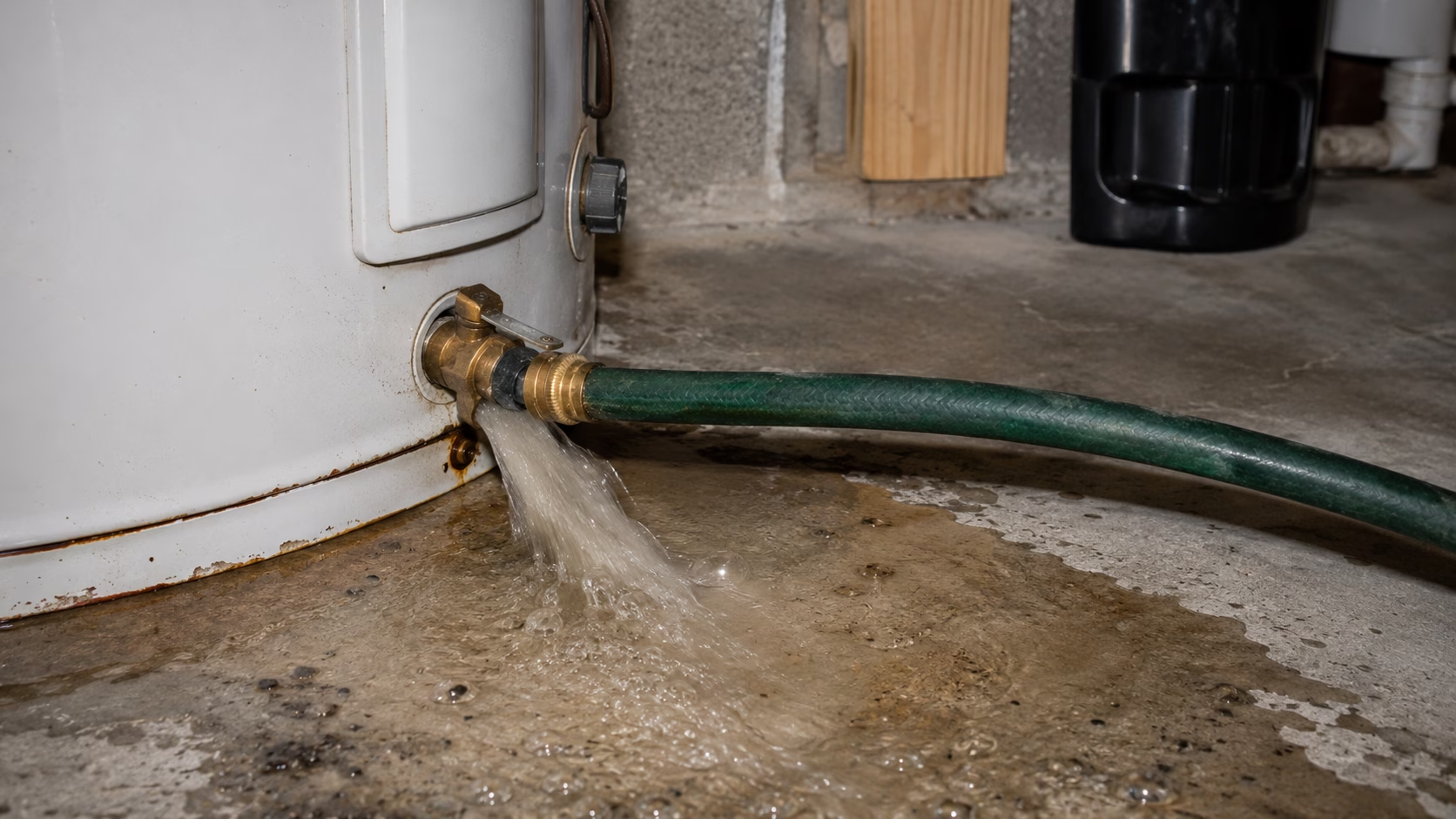
- Attach a garden hose to the drain valve at the base and run it to a floor drain or outside.
- Open a hot tap somewhere in the house to break the vacuum.
- Open the drain valve and let the tank empty. Expect cloudy, gritty water at first.
- Flush: with the drain still open, briefly reopen the cold supply to stir up and push out remaining sediment. Repeat until the water runs clear.
- Close the drain valve, remove the hose, reopen the cold supply, and let the tank refill (the open hot tap will sputter, then run steady).
- Restore power/gas once the tank is full — never energize an empty electric heater, it destroys the elements.
⚠️ Never turn the power back on before the tank is completely full. On an electric heater, dry-firing burns out the elements in seconds.
If the Drain Valve Leaks Afterward
A very common outcome: the old plastic drain valve does not reseal after flushing, because sediment lodges under the seat or the brittle plastic gives out. Try opening and closing it once more to flush the debris. If it keeps dripping, see water heater drain valve leaking — the fix is a $10 brass valve.
How Often to Flush
Once a year is the standard recommendation; twice a year in hard water areas. If you have never flushed a 10-year-old tank, be aware that a heavy sediment layer can clog the drain valve during the process — in very old, never-flushed tanks, some plumbers advise leaving it alone rather than risking a stuck valve on a tank near end of life.
Pair flushing with an anode rod check to maximize tank life. Note: tankless units are different — they need descaling with vinegar, not a sediment flush.
FAQ
How often should you flush a water heater?
Once a year for most homes, twice a year with hard water. Regular flushing prevents sediment buildup that causes rumbling noises, reduced hot water, higher bills, and premature tank failure.
Is it too late to flush an old water heater?
If a tank is 10+ years old and has never been flushed, heavy sediment can clog the drain valve mid-flush, leaving you with a stuck-open valve. Many plumbers advise not flushing a very old, never-maintained tank that is working — weigh it against the tank’s remaining life.
Why is my water heater making a rumbling noise?
Sediment at the bottom of the tank traps water underneath it; as the burner heats, that water boils and forces its way through, making popping and rumbling sounds — see water heater making noise. Flushing removes the sediment and usually quiets it.
Sources: U.S. Department of Energy — Water Heating · manufacturer service documentation (A.O. Smith, Rheem, Bradford White).