Last updated: July 2026 · Reviewed against A.O. Smith, Rheem and Bradford White service documentation
A leaking temperature and pressure (T&P) relief valve is one of the most misunderstood water heater problems — because the valve leaking is often a symptom of something else, not a faulty valve. The T&P valve is a critical safety device that opens to release water if pressure or temperature inside the tank climbs to dangerous levels. So when you see it dripping, the real question is: is the valve doing its job (responding to genuinely high pressure), or has the valve itself failed? Getting this right matters, because it is the one water heater part you must never simply cap or plug. This guide shows you how to tell which it is and fix the underlying cause.
What the T&P Valve Does
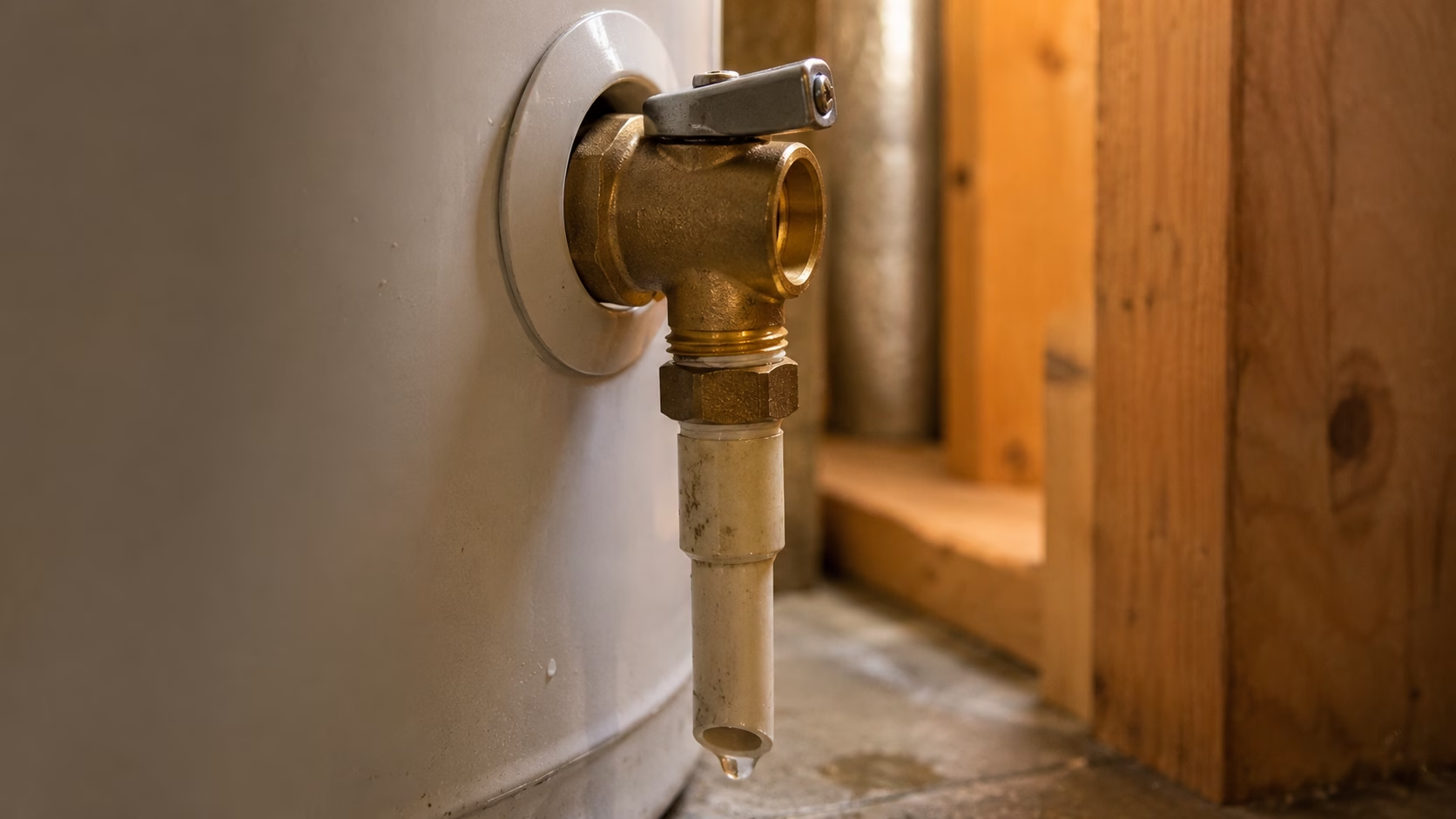
The T&P relief valve is mounted on the top or upper side of the tank, with a discharge tube running down toward the floor. If the water temperature exceeds about 210°F or the pressure exceeds 150 psi, the valve opens and releases water to prevent the tank from becoming a dangerous pressure vessel. Without a working T&P valve, an overheating water heater can, in the worst case, rupture explosively. This is why the valve exists and why it must never be blocked — a dripping valve is annoying, but a disabled one is dangerous.
Two Possibilities: Doing Its Job vs. Failed
When water comes from the valve or its discharge tube, it is one of two things:
- The valve is correctly releasing water because pressure or temperature is genuinely too high. The valve is fine — the problem is upstream, and you need to fix what is causing the high pressure or temperature.
- The valve itself has failed — it is old, corroded, or has debris under the seat, so it weeps even at normal pressure. Here the valve needs replacing.
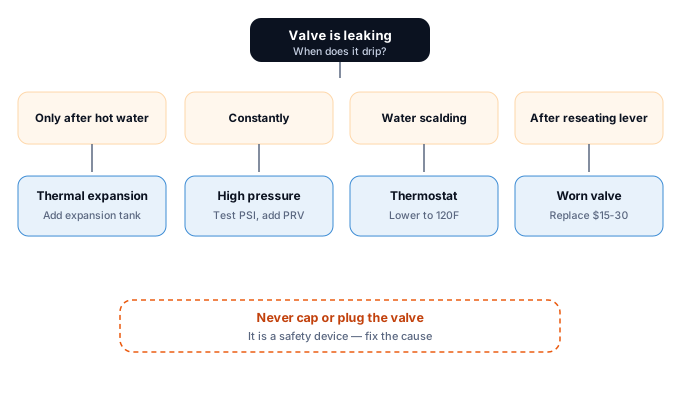
The clue: if it drips mainly after heating cycles or at certain times of day, it is likely responding to real pressure/thermal expansion. If it drips constantly regardless, the valve has probably failed.
Cause 1: Excessive Water Pressure
High household water pressure is a leading cause. If your home’s water pressure exceeds 80 psi, it stresses the whole system and pushes the T&P valve to relieve. Test it with an inexpensive pressure gauge on a hose bib — anything over 80 psi is too high. The fix is a pressure reducing valve (PRV) on your main line, which many homes need and some lack.
Cause 2: Thermal Expansion (Closed System)
The most common cause on modern plumbing. When water heats it expands; in a closed system (one with a PRV or check valve on the main), that expanding water has nowhere to go, so pressure spikes after each heating cycle and forces the T&P valve to drip. The solution is a thermal expansion tank, which gives the water a cushion to expand into. If your valve drips only after the heater runs, this is almost certainly why.
Cause 3: Temperature Set Too High
If the thermostat is set too high, the water can approach the valve’s temperature trip point and cause it to release. Lower the setting toward 120°F — see adjusting your water heater temperature. This also saves energy and reduces scald risk. A failing thermostat that lets the tank overheat can do the same and may need replacing.
Cause 4: A Failed Valve
If pressure and temperature are normal but the valve still weeps, the valve itself has failed — debris under the seat or age-related wear. First try lifting the test lever to flush out any debris and let it snap closed. If it still drips, replace it. A new T&P valve costs $15–$25 and threads in after draining the tank below the valve level. Never reuse a valve that will not seal.
⚠️ Never cap, plug, or block a leaking T&P valve. It is a safety device — disabling it can turn an overheating water heater into an explosion hazard. Always fix the underlying cause instead.
How to Diagnose Yours
- Note when it drips — after heating cycles (thermal expansion) or constantly (failed valve).
- Test your water pressure with a gauge on a hose bib. Over 80 psi means you need a PRV.
- Check your thermostat setting; lower it toward 120°F.
- Look for a PRV or check valve on your main line — if present, you have a closed system and likely need an expansion tank.
- If pressure, temperature, and expansion all check out, replace the valve.
When to Call a Plumber
Call a plumber to install a pressure reducing valve or expansion tank if you are not comfortable with that plumbing, if the valve keeps leaking after you have addressed pressure and replaced it, or if you are unsure whether your system is open or closed. Never ignore a persistently leaking T&P valve — it is either warning you of a real pressure problem or failing to protect you. See why your water heater is leaking for the bigger picture.
FAQ
Why is my water heater pressure relief valve leaking?
Most often thermal expansion in a closed plumbing system (needing an expansion tank), excessive water pressure over 80 psi, or a temperature set too high. Less often, the valve itself has failed. If it drips after heating cycles, suspect thermal expansion; if constantly, the valve may be bad.
Is it safe to use a water heater with a leaking T&P valve?
A slow drip is not an immediate emergency, but address it promptly — it signals either a pressure problem or a failing safety valve. Never cap or block the valve to stop the drip; that removes a critical safety protection.
How much does it cost to fix a leaking relief valve?
The valve itself is $15–$25 and DIY-replaceable. If the cause is thermal expansion, an expansion tank is $40–$70 (or $150–$350 installed). A pressure reducing valve for high pressure runs more. Diagnosing the cause first avoids paying for the wrong fix.
Sources: U.S. Department of Energy — Water Heating · manufacturer documentation.