Last updated: July 2026 · Reviewed against A.O. Smith, Rheem and Bradford White service documentation
Water pooling on top of your water heater is one of the more reassuring places to find a leak — because unlike a leak from the tank body, a top leak is almost always repairable and rarely means you need a new water heater. The water is coming from one of the fittings, valves, or connections on the top of the unit, and most of these are inexpensive fixes. The catch is that water runs downhill, so a leak that appears at the top can trickle down and pool at the base, making it look worse than it is. This guide walks you through pinpointing exactly which top-of-tank component is leaking, how serious each one is, and how to fix it.
The four usual culprits, from most to least common: loose or corroded water line connections, a leaking T&P (temperature and pressure) relief valve, corroded inlet/outlet nipples, and plain condensation that is not a leak at all. Let us find yours.
First: Shut It Down and Find the True Source
Before diagnosing, make the area safe and dry so you can see where fresh water is actually appearing. Turn off the power or gas to the heater, and if the leak is significant, close the cold water supply valve on top of the tank. Then dry the entire top of the unit completely with a towel.
Now watch. Within a few minutes, fresh water will reappear at its true origin. Trace it to the highest point — that is your source. This step matters because water travels along pipes and down the side of the tank, so the puddle you first noticed may be inches or even feet from where the water is actually escaping. A flashlight and a dry paper towel dabbed at each fitting will reveal the exact spot.
⚠️ If you smell gas at any point, stop immediately, leave the house, and call your gas utility from outside. Do not touch electrical switches.
Cause 1: Loose or Corroded Water Line Connections
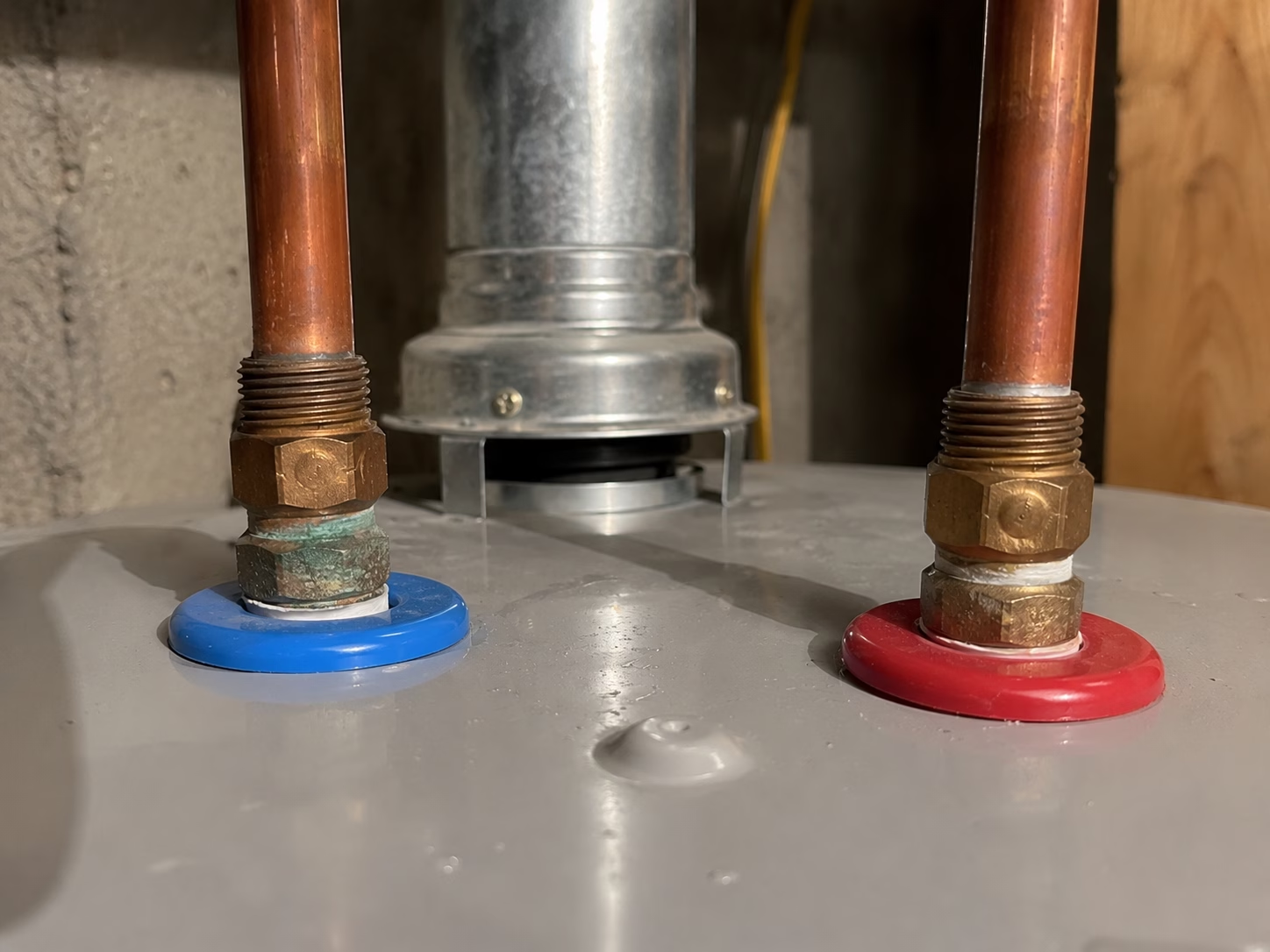
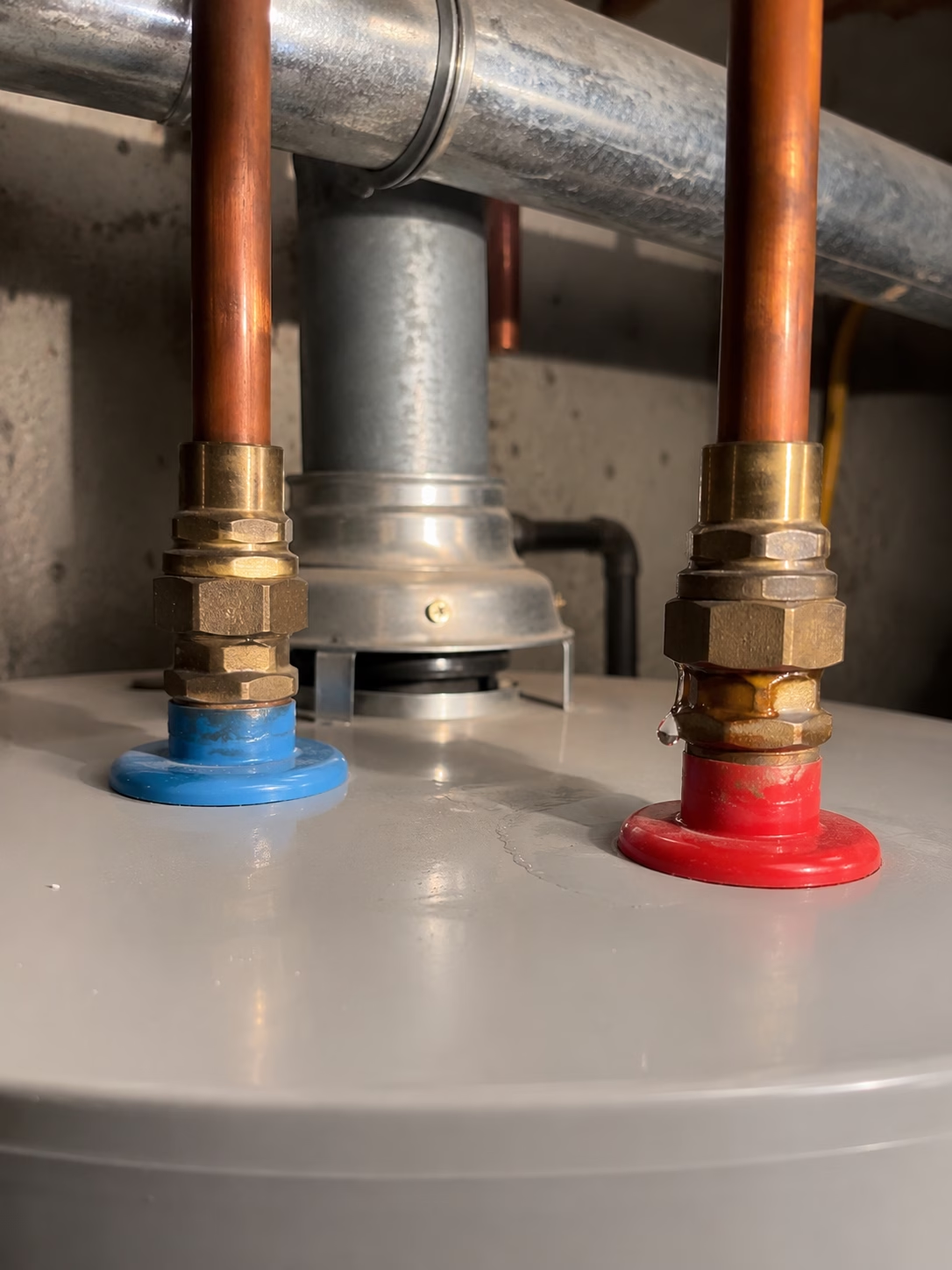
This is the single most common source of a top leak. Two pipes connect to the top of every water heater — the cold water inlet and the hot water outlet. Over years of thermal expansion and contraction, these threaded or soldered connections can loosen, and the fittings (especially flexible supply connectors) can corrode or develop pinhole leaks. The result is water weeping from the connection point and running down the tank.
How to fix it: First, simply try tightening the connection with a wrench — but gently, as overtightening can crack fittings or strip threads. If it is a compression or union fitting, a quarter turn is often enough. If tightening does not stop it, shut off the water, disconnect the fitting, and inspect it. A corroded flexible connector should be replaced (they cost $10–$20). For threaded connections, clean the threads and re-wrap them with fresh PTFE (plumber’s) tape before reconnecting. If you have dielectric unions (fittings designed to prevent galvanic corrosion between dissimilar metals), check that their rubber gaskets have not failed.
Difficulty: Easy to moderate. Most homeowners can handle tightening or swapping a flexible connector. The repair is cheap, and it resolves the majority of top leaks.
Cause 2: The T&P Relief Valve
The temperature and pressure (T&P) relief valve is a critical safety device, usually located on the top or upper side of the tank, with a discharge tube running down toward the floor. Its job is to open and release water if the pressure or temperature inside the tank climbs to dangerous levels. So when you see water coming from this valve or its discharge tube, there are two possibilities — and telling them apart matters.
- The valve is doing its job: it is correctly releasing water because pressure or temperature is genuinely too high. This points to an underlying problem — excessive water pressure (often needing an expansion tank), a temperature set too high, or a failing thermostat.
- The valve itself has failed: the valve is old, corroded, or has debris under the seat, and no longer seals — so it weeps even at normal pressure.
How to fix it: Never plug or cap a leaking T&P valve — that defeats a safety device and can turn your water heater into a genuine explosion risk. Instead, first rule out high pressure: if the valve only drips after heating cycles, you likely have a thermal expansion problem. If it drips constantly, the valve is probably faulty and should be replaced (a $15–$25 part). We cover this in depth in our guide to a water heater pressure relief valve leaking.
Cause 3: Corroded Inlet/Outlet Nipples
The nipples are the short threaded pipe sections where the water lines screw into the tank. Because they are the junction between the tank and your copper or steel plumbing, they are a classic spot for galvanic corrosion — the electrochemical reaction that occurs when two dissimilar metals meet in the presence of water. Over 8–12 years, this corrosion can eat through the nipple and cause a slow leak right at the top of the tank.
How to fix it: This is a more involved repair. The nipples thread into the tank, and replacing them means draining the tank, disconnecting the water lines, and unscrewing the old nipple. Many homeowners opt to install heat trap nipples or dielectric nipples as replacements to slow future corrosion. If you are comfortable with plumbing, it is doable; if not, this is a reasonable point to call a plumber, since it involves working right at the tank’s connections. Given the age at which nipples typically corrode, also weigh the tank’s overall age — see below.
Cause 4: Condensation (Not Actually a Leak)
Before you replace any parts, rule out condensation — a surprisingly common false alarm. When cold water fills the tank (especially in humid weather or in an unheated basement), the temperature difference can cause water to condense on the outside of the tank and its pipes, dripping down and pooling as if there were a leak. On gas units, heavy condensation can even drip onto the burner.
How to tell: Dry everything, then watch. If the moisture appears as a fine even film across the tank surface rather than a stream from one fitting, and especially if it shows up mainly after a big draw of hot water (refilling with cold), it is condensation. It often resolves on its own as the tank warms, and is common on new installations or during seasonal humidity. Persistent heavy condensation can point to an oversized tank or a flue problem on gas units, but it is not a leak to repair.
How Age Changes the Decision
A top leak is repairable — but whether it is worth repairing depends on the age of the tank. If your water heater is under 8 years old, fixing a connection, valve, or nipple is clearly worthwhile. If it is 10–12+ years old and out of warranty, a leaking nipple or connection may be the first sign of an aging unit, and you might weigh the repair against a planned replacement — especially if you also notice rust in the hot water or any weeping from the tank body itself. Check your unit’s age from the serial number (A.O. Smith or Whirlpool), and see water heater replacement cost to compare.
When to Call a Plumber
Many top leaks are DIY-friendly, but call a professional if: tightening and reconnecting the water lines does not stop the leak, the leak is coming from a corroded nipple you are not comfortable replacing, the T&P valve keeps leaking after you have addressed pressure and replaced the valve, or you see any sign the leak is actually coming from the tank body rather than a top fitting. A plumber’s visit for a top-of-tank repair typically runs $150–$350 depending on the part. If the diagnosis reveals the tank itself is failing, see why your water heater is leaking for the full picture.
FAQ
Why is my water heater leaking from the top?
The most common cause is a loose or corroded water line connection at the cold inlet or hot outlet. Other causes are a leaking T&P relief valve, corroded inlet/outlet nipples, or simple condensation that is not a true leak. Top leaks are almost always repairable and rarely mean you need a new tank.
Is a water heater leaking from the top dangerous?
It is usually less urgent than a bottom leak, but address it promptly. Water can drip onto electrical components or a gas burner, and a leaking T&P valve may signal dangerous pressure. Shut off power and, if needed, the water supply, then diagnose the source.
Can I fix a water heater leaking from the top myself?
Often yes. Tightening or replacing a flexible water connector and re-taping threaded fittings are straightforward DIY jobs. Replacing corroded nipples or a faulty T&P valve is more involved but still doable for a confident DIYer. Call a plumber if the leak persists or comes from the tank body.
Why is water pooling on top of my water heater but the fittings look dry?
That points to condensation rather than a leak, especially in a humid or unheated space or right after a large hot water draw. Dry the tank and watch: an even film that returns gradually is condensation; a stream from a specific fitting is a leak.
Sources: U.S. Department of Energy — Water Heating · manufacturer service documentation (A.O. Smith, Rheem, Bradford White).