Last updated: July 2026 · Reviewed against A.O. Smith, Rheem and Bradford White operating instructions
Knowing how to turn off your water heater is essential in an emergency — a leak, a burst tank, or before any repair. The steps differ depending on whether you have a gas or electric unit, and there are actually two separate shut-offs to understand: turning off the heating (gas or power) and turning off the water supply. In a real emergency like a major leak, you usually want to do both. This guide covers exactly how to shut down each type safely, in the right order, so you can act fast when it matters.
Two Things You Can Turn Off
Before the steps, understand the difference — it determines what you shut off:
- The heat source (gas or electricity): stops the unit from heating. Do this before draining, servicing, or if the tank is empty/overheating.
- The cold water supply: stops more water entering the tank. Do this to stop a leak or before removing the unit.
For a leak emergency, turn off both — heat first, then water. For most repairs, both. To simply stop heating (going on vacation), just the heat source.
How to Turn Off a Gas Water Heater
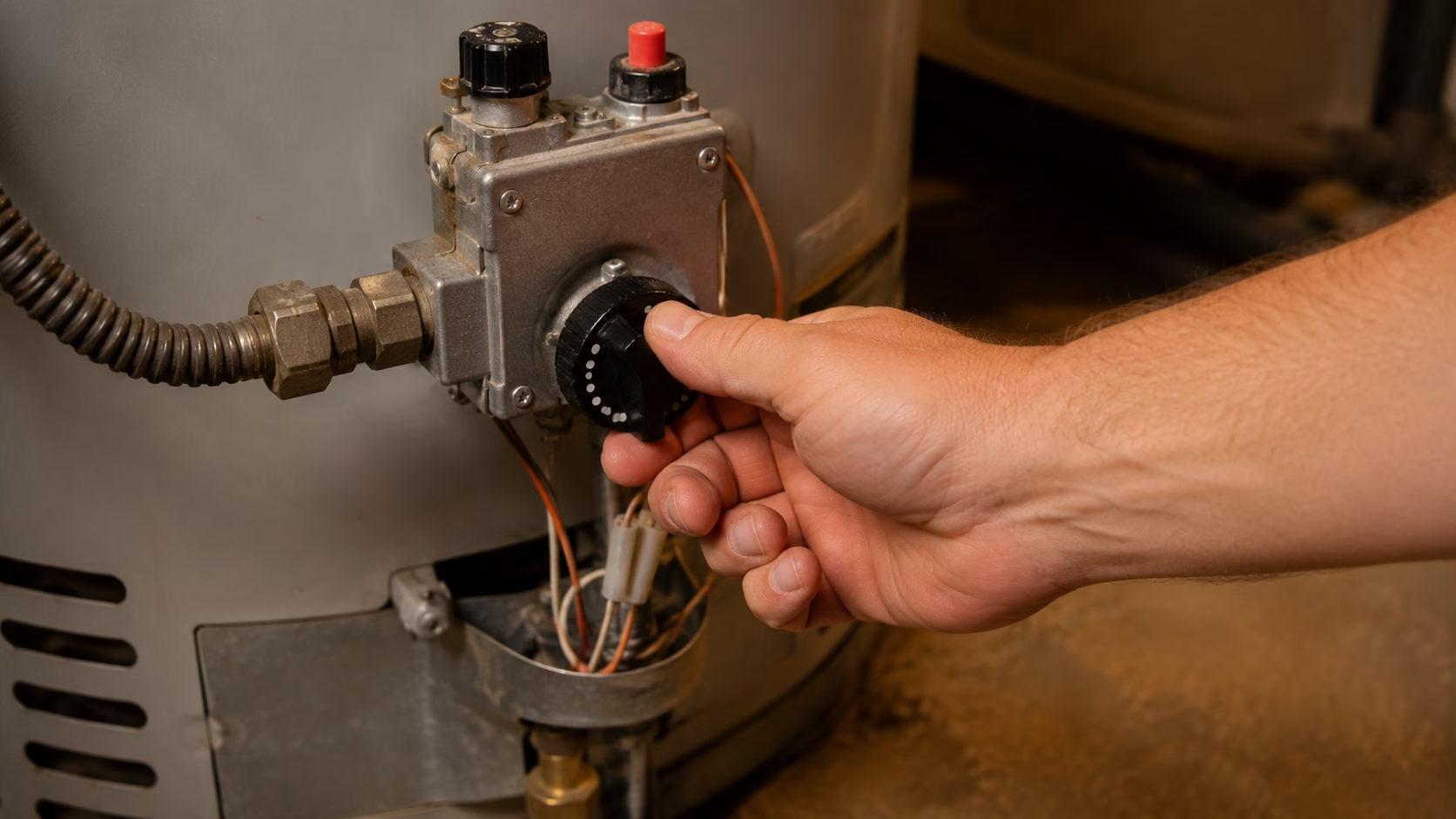
- Find the gas control valve at the bottom of the tank — a dial labeled ON / OFF / PILOT.
- Turn the dial to OFF (or PILOT if you only want to pause heating but keep the pilot lit).
- For a full shut-off, also close the gas supply valve on the gas line running to the heater — turn the handle so it is perpendicular to the pipe.
- To stop water too, close the cold water shut-off valve on top of the tank (see below).
How to Turn Off an Electric Water Heater
- Go to your electrical panel (breaker box).
- Find the breaker labeled for the water heater — usually a double-pole 30-amp breaker. If unlabeled, it is often a prominent double breaker.
- Switch it to OFF. This cuts the 240V power to the heating elements.
- To stop water too, close the cold water shut-off valve on top of the tank.
⚠️ Never turn the power back on to an electric water heater unless the tank is full of water. Energizing the elements in an empty or partially drained tank burns them out in seconds.
How to Turn Off the Water Supply
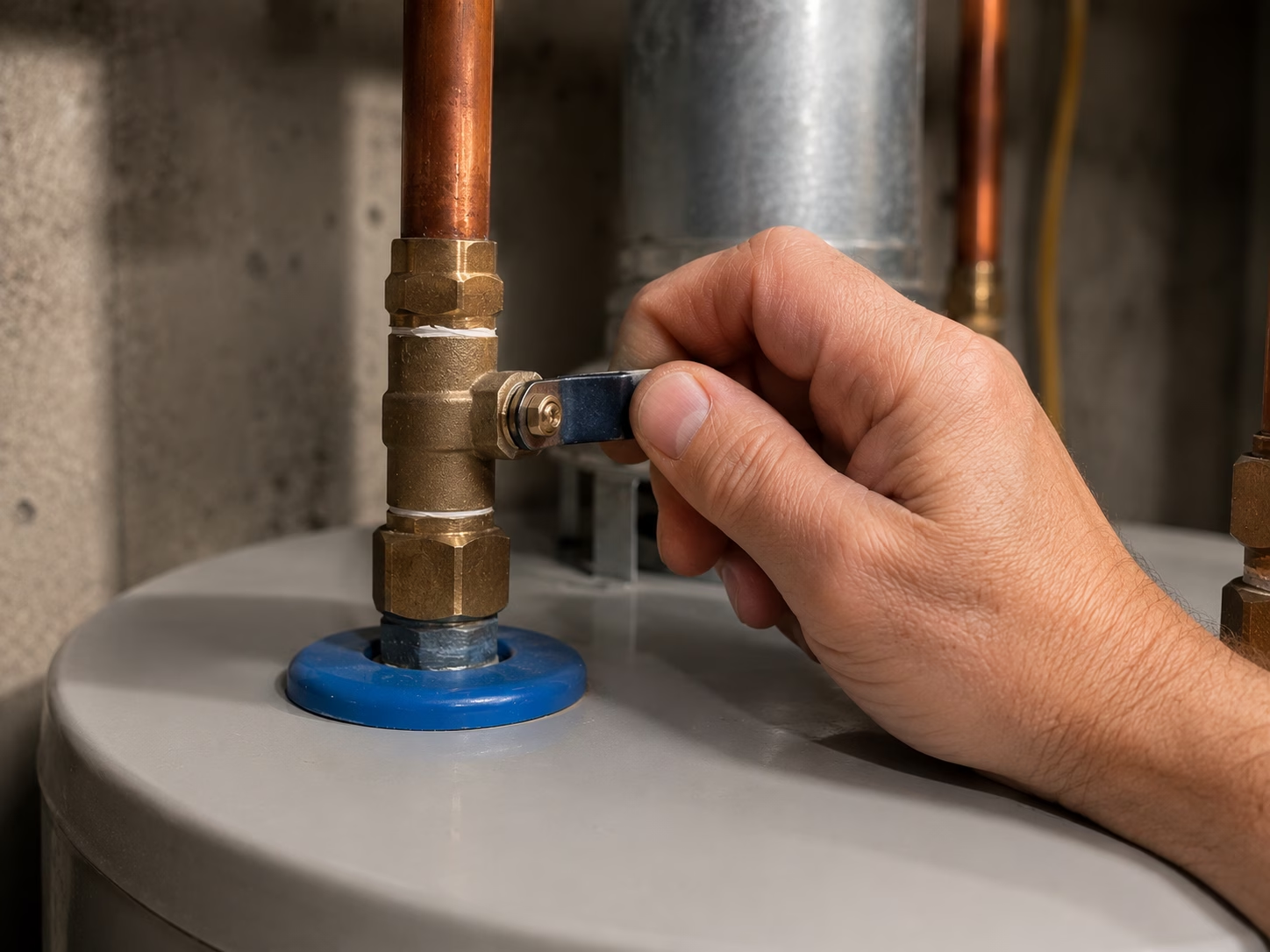
The cold water shut-off valve is on the cold inlet pipe entering the top of the tank — usually a lever or a round wheel. Turn a lever a quarter turn so it is perpendicular to the pipe, or turn a wheel clockwise until it stops. This stops new water entering the tank. If you cannot find or turn the tank’s shut-off valve, use your home’s main water shut-off instead, which stops water to the whole house. Knowing where your main shut-off is before an emergency is worth a two-minute check today.
Emergency: Water Heater Leaking or Bursting
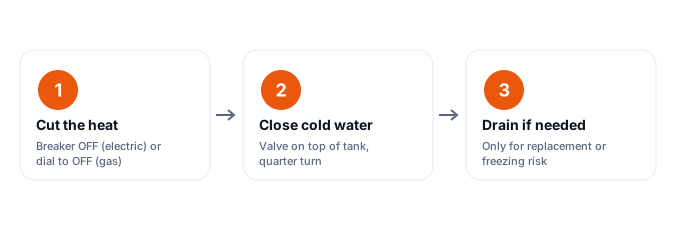
If your water heater is leaking badly or has burst, act in this order: (1) turn off the heat source — gas dial to OFF or breaker off — to prevent dry-firing or overheating; (2) close the cold water supply to stop the flow; (3) if you cannot stop it at the tank, shut off the main water supply to the house. Then drain the tank via the drain valve if needed. Once things are stable, diagnose the source — see why your water heater is leaking and leaking from the bottom.
Turning It Back On
Reverse the steps, but order matters: always refill the tank with water before restoring heat. Open the cold water supply, open a hot tap in the house until water runs steadily (this releases trapped air and confirms the tank is full), then turn the gas back on and relight the pilot if needed, or flip the breaker back on. Never restore power or gas to an empty tank.
FAQ
How do I turn off my water heater in an emergency?
Turn off the heat source first — gas dial to OFF or the breaker off — then close the cold water shut-off valve on top of the tank. If you cannot stop the water there, shut off your home’s main water supply. This sequence protects the unit and stops the flow.
Should I turn off the water heater if it is leaking?
Yes. Turn off the heat source and the cold water supply to stop the leak worsening and prevent the unit from overheating or dry-firing. Then diagnose the source — a valve or connection leak is often repairable, while a leaking tank body means replacement.
Do I turn off the gas or water first?
Turn off the heat source (gas or electricity) first, then the water. This prevents the burner or elements from running against a dropping water level. When turning it back on, reverse the order: water first, then heat, so you never energize an empty tank.
Where is the shut-off valve on a water heater?
On the cold water inlet pipe entering the top of the tank — a lever or round wheel. Turn a lever perpendicular to the pipe, or a wheel clockwise until it stops. If it will not budge, use your home’s main water shut-off instead.
Sources: U.S. Department of Energy — Water Heating · manufacturer documentation.