Last updated: July 2026 · Reviewed against Carrier, Goodman and Trane service documentation
If you have no air at all rather than cold air, see furnace not blowing hot air. A furnace blowing cold air usually comes down to one of five things: a thermostat set to “ON” instead of “AUTO”, a dirty flame sensor shutting down the burners, an overheated furnace on safety lockout, an empty condensate trap, or a pilot/ignition failure. Most are quick to diagnose, and several you can fix yourself in minutes. Here is how to find the cause.
The Fastest Check: Thermostat Fan Setting
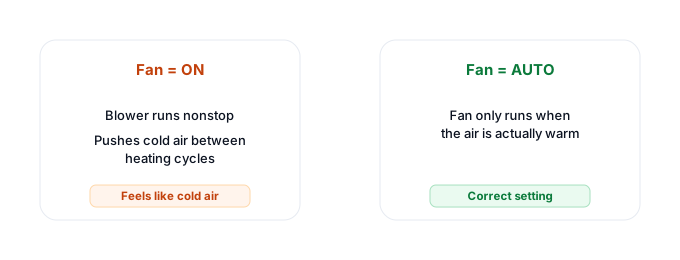
If your furnace blows cold air constantly — even between heating cycles — the culprit is almost always the thermostat fan set to ON instead of AUTO. On ON, the blower runs nonstop, pushing unheated air whenever the burners are not firing. Switch it to AUTO and the fan will only run when the air is actually warm. This single setting resolves a huge share of “cold air” complaints.
Dirty Flame Sensor (Warm Then Cold)
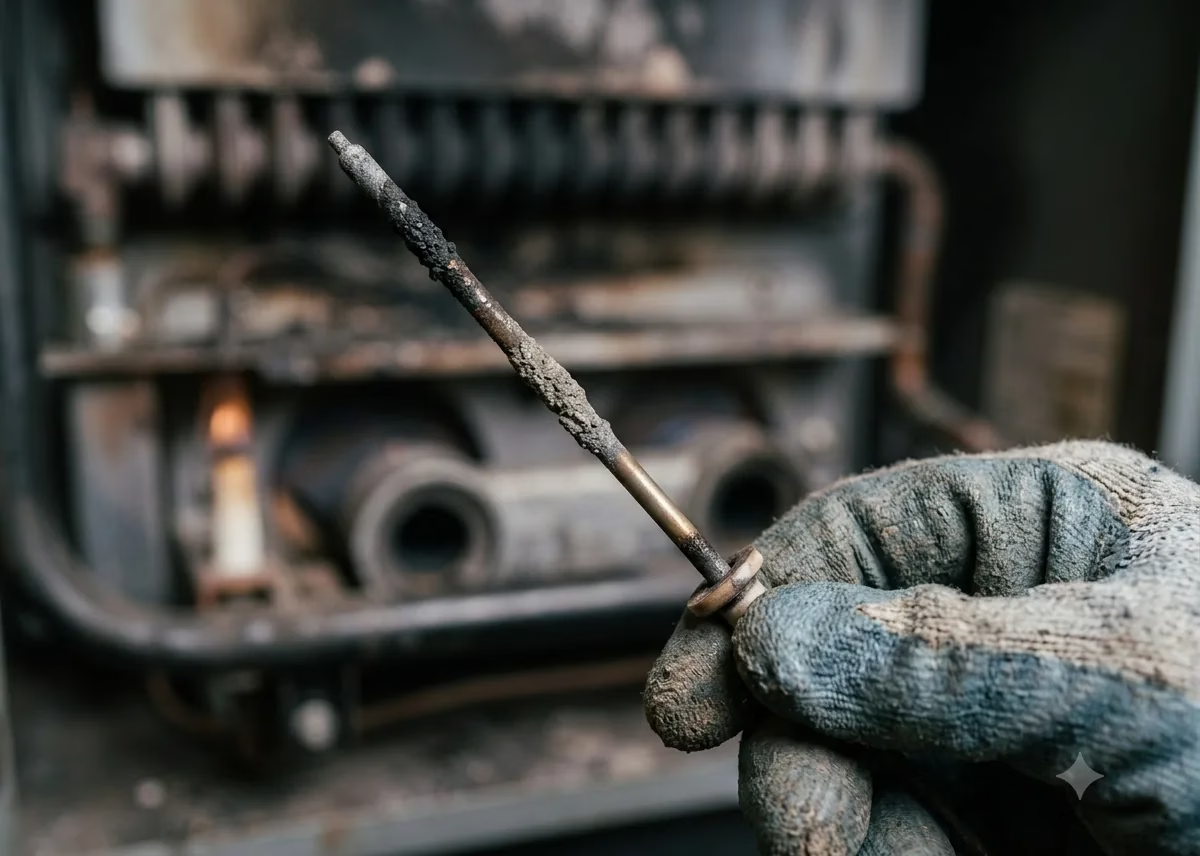
If the furnace starts warm but then blows cold after a minute or two, the classic cause is a dirty flame sensor. The sensor confirms the burner has lit; when it is coated in carbon, it fails to detect the flame and shuts the gas off as a safety measure — but the blower keeps running, pushing cold air. Cleaning the sensor (a thin metal rod) with fine sandpaper often fixes it for free. This is the same fault behind many cases of a furnace not turning on.
Overheating and Safety Lockout
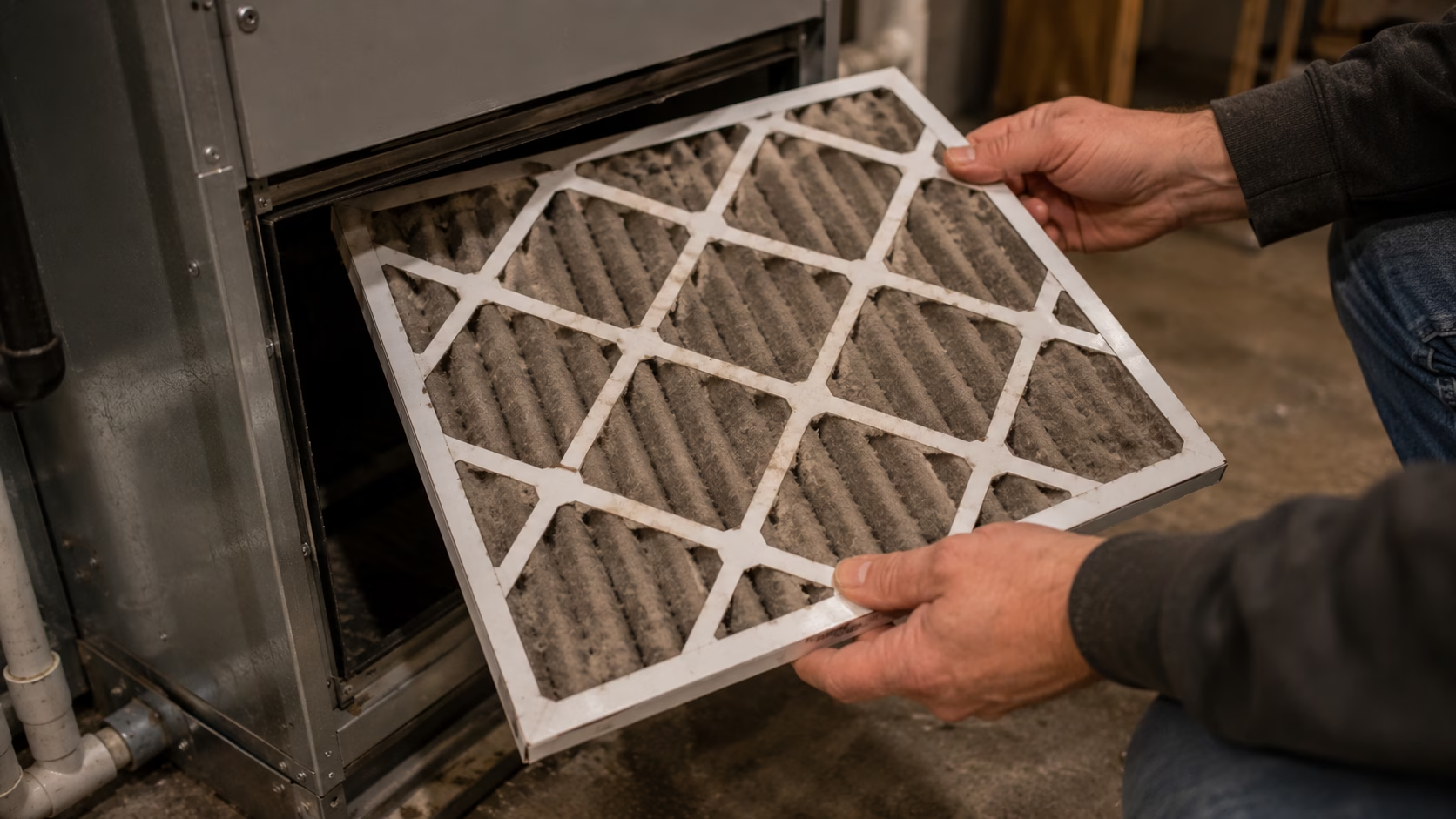
A clogged air filter or blocked vents restrict airflow, causing the furnace to overheat and trip its high-limit switch. The burners shut off but the blower runs to cool the unit — blowing cold air. Replace a dirty filter (check it monthly in winter), make sure supply and return vents are open and unblocked, then cycle the power to reset.
Condensate and Ignition Problems
On high-efficiency furnaces, a full condensate trap trips a float switch that cuts the burners. And on any gas furnace, a failed ignitor or an out pilot light means no flame at all — just the blower moving cold air. If you have worked through the checks above and still get cold air, read the LED error code through the furnace door window (the legend is printed inside the panel) to pinpoint whether it is ignition, pressure, or flame sensing.
When to Call a Pro
Call an HVAC technician if the ignitor or gas valve has failed, the error code points to the control board, or the furnace overheats repeatedly even with a clean filter. If the furnace also will not start at all, see our guide to a furnace not turning on. Diagnostic visits typically run $90–$180.
FAQ
Why is my furnace blowing cold air when the heat is on?
The most common reason is the thermostat fan set to ON instead of AUTO, which runs the blower nonstop. If the air starts warm then turns cold, suspect a dirty flame sensor or an overheating furnace on safety lockout.
Why does my furnace blow cold air then warm up?
That is normal at the start of a cycle — the blower may run briefly before the heat exchanger warms up (though most modern furnaces delay the fan to prevent this). If it stays cold, the burners are not firing.
Can a dirty filter cause cold air?
Yes. A clogged filter causes overheating, which trips the limit switch and shuts off the burners while the blower keeps running — producing cold air. Replacing the filter and resetting the furnace usually fixes it.
Sources: U.S. Department of Energy — Home Heating Systems · manufacturer service manuals (Carrier, Goodman, Trane).