Last updated: July 2026 · Verified against Carrier, Trane and Goodman service documentation
A furnace that will not turn on usually has a simple cause: a thermostat setting, a tripped breaker, a switched-off power switch, a dirty flame sensor, or a clogged filter that triggered a safety lockout. Most of these take five minutes and zero tools to check — and they resolve roughly half of all “dead furnace” calls before a technician ever shows up.
Work through the checks below in order, from most likely to least. Each step tells you exactly what to look for and when to stop and call a pro.
Quick Checklist: The 5-Minute Fixes First
| Check | What to do | Fixes it how often |
|---|---|---|
| Thermostat | Set to HEAT, temp 5°F above room; replace batteries | Very common |
| Furnace power switch | Wall switch near the unit (looks like a light switch) — flip ON | Common |
| Circuit breaker | Reset the “Furnace/FAU” breaker fully OFF, then ON | Common |
| Air filter | If it is gray and clogged, replace — overheating triggers lockout | Common |
| Gas supply | Gas valve lever parallel to pipe = open | Occasional |
| Condensate/float switch | High-efficiency units: full drain pan cuts power | Occasional |
⚠️ If you smell gas, stop. Do not flip switches or use your phone indoors. Leave the house and call your gas utility from outside.
Step 1: Rule Out the Thermostat
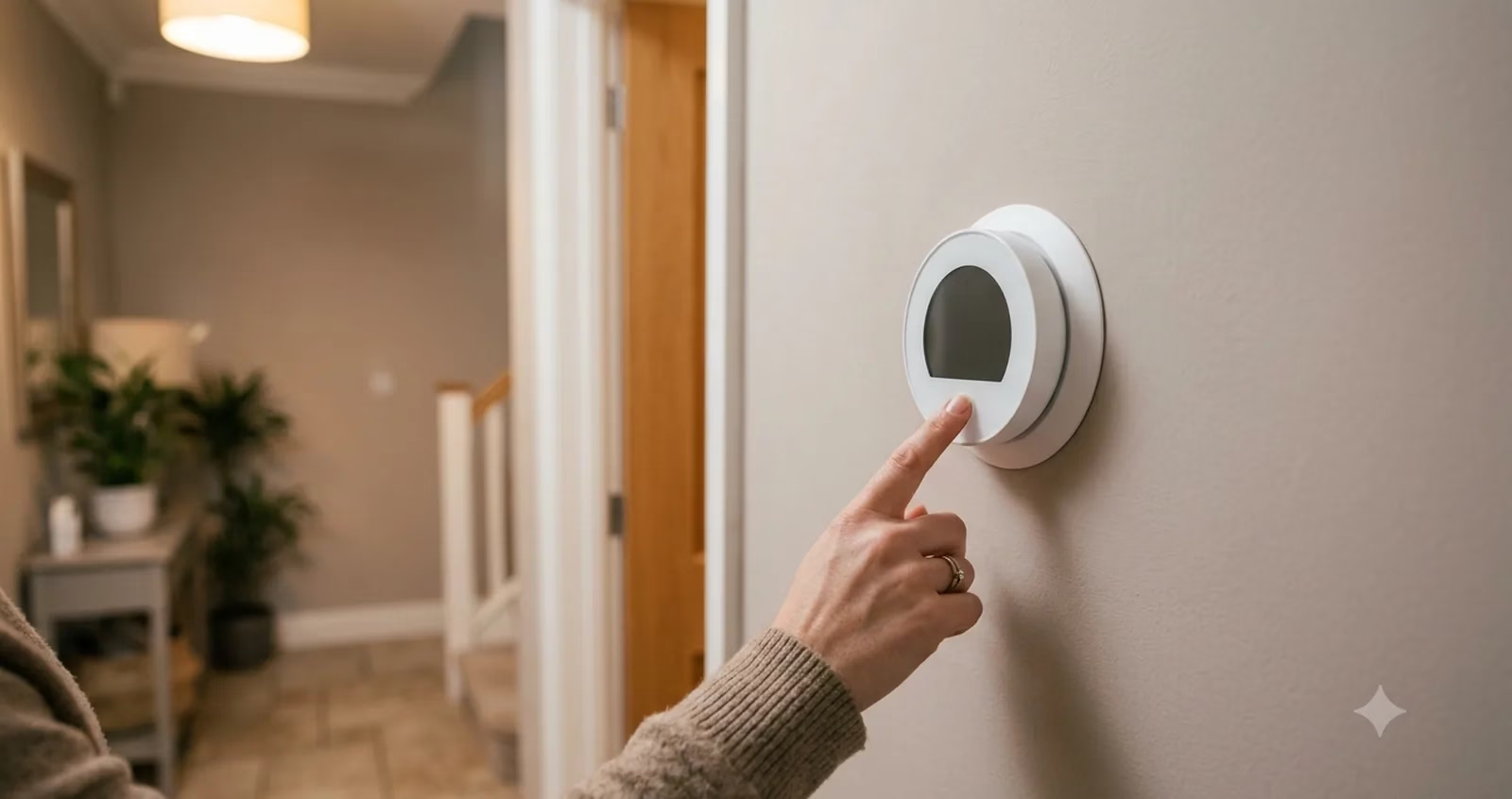
Set the thermostat to HEAT and raise the target at least 5°F above the room temperature. If the display is blank or faded, replace the batteries — a dying thermostat is one of the most common “broken furnace” culprits. On smart thermostats, check that the schedule or an eco/away mode is not holding the temperature down. Wait three minutes after any change: many furnaces have a built-in delay before ignition.
Step 2: Power — the Switch Everyone Forgets
Every furnace has a service switch mounted on or near the unit that looks exactly like a regular light switch — and it gets flipped off by accident constantly (kids, movers, brushing past it with a laundry basket). Make sure it is ON. Then check the breaker panel: find the breaker labeled “Furnace” or “FAU”, push it fully OFF, then back ON. A breaker that trips again immediately means an electrical fault — stop and call a pro.
Step 3: The Air Filter (Yes, Really)
A clogged filter starves the furnace of airflow until the heat exchanger overheats and a safety limit switch shuts everything down. After several overheat cycles, many furnaces enter a hard lockout and will not respond at all. Pull the filter: if you cannot see light through it, replace it (a 16x25x1 filter runs $5–$15). After replacing, cut power for 30 seconds to reset the board, then try again.
Step 4: Check the Ignition System
Watch (and listen to) the furnace when the thermostat calls for heat. What happens next tells you where the failure is:
- Nothing at all — no clicks, no hum: power or control board issue (or thermostat wiring).
- Clicking but no flame: ignitor or gas valve problem. On older units, the pilot light may be out.
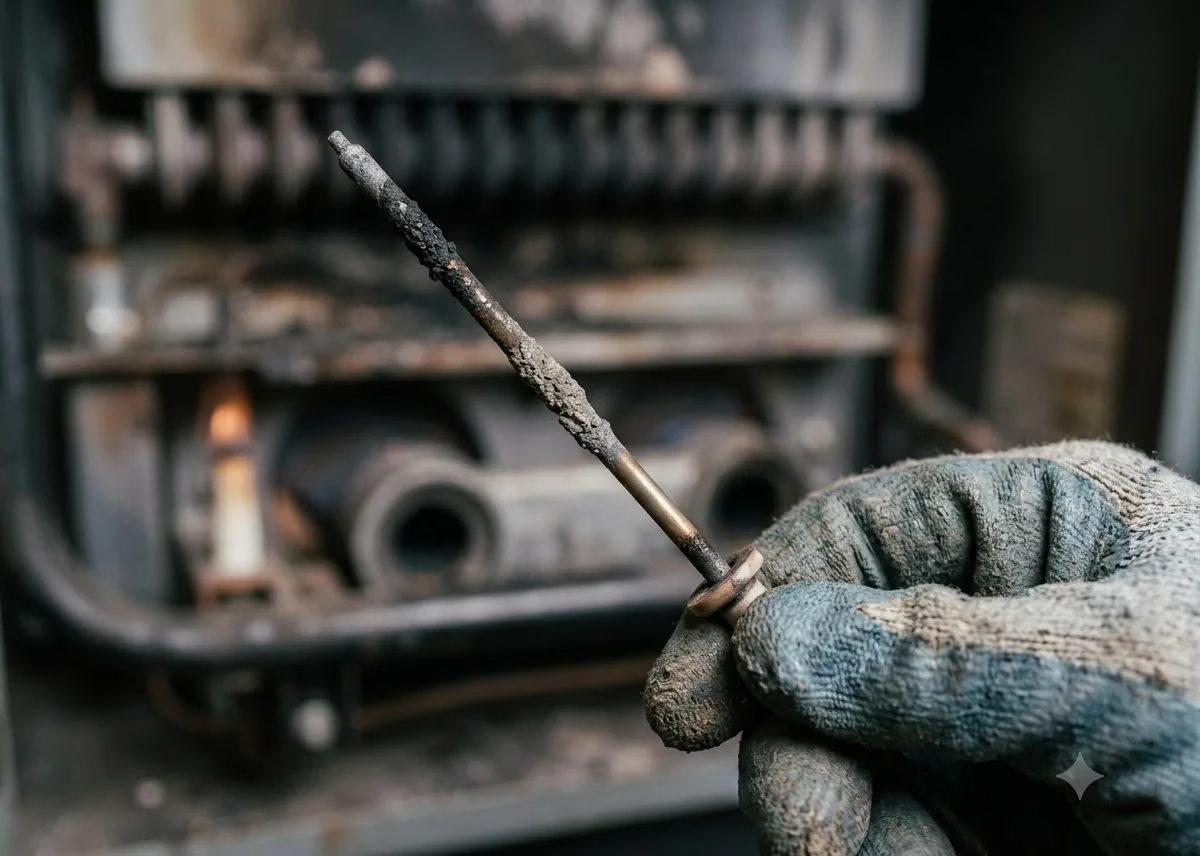
- Flame lights, then dies in seconds: classic dirty flame sensor — a $0 fix if you clean it.
- Blower runs but air is cold: different problem — see our guide to a furnace blowing cold air.
Step 5: Read the Error Code (LED Blinks)
Look through the small plastic window on the furnace door: most modern furnaces flash an LED in a pattern that maps to a specific fault — the legend is printed inside the door panel or on a sticker. Count the blinks (e.g., 3 flashes then pause), match it to the legend (for Lennox units, see our Lennox red light code guide), and you will know whether the fault is the pressure switch, limit switch, ignition, or flame sensing. This one code often saves a $150 diagnostic fee, or at least tells the technician exactly what to bring.
Step 6: High-Efficiency Units — Condensate and Intake
Condensing furnaces (the ones with white PVC pipes) have two extra failure points. First, the condensate drain: if the trap or pan fills with water, a float switch cuts the furnace off — clear the drain line and it comes back. Second, the intake/exhaust pipes that exit through the wall or roof: snow, ice, leaves, or even a bird’s nest blocking them will stop ignition via the pressure switch.
What a Repair Costs If It Is Not DIY (2026)
| Repair | Typical cost installed |
|---|---|
| Diagnostic visit | $90–$180 |
| Flame sensor replacement | $80–$200 |
| Hot surface ignitor | $150–$300 |
| Pressure or limit switch | $150–$350 |
| Gas valve | $300–$750 |
| Control board | $400–$700 |
When to Call a Pro
Call an HVAC technician if: the breaker re-trips, you smell gas, the error code points to the gas valve or control board, the flame is orange/yellow instead of blue (combustion problem), or the furnace is short cycling repeatedly even after a filter change. Emergency winter no-heat visits typically run $150–$300 for the call-out before parts.
FAQ
Why is my furnace not turning on but the thermostat works?
A live thermostat only proves the thermostat has power. The usual suspects are the furnace service switch, the furnace breaker, a hard safety lockout from overheating, or a blown low-voltage fuse on the furnace control board (a $2 automotive-style fuse).
How do I reset my furnace?
Turn the furnace power switch (or breaker) off, wait 30–60 seconds, and turn it back on. This clears most soft lockouts. If the furnace locks out again within minutes, it is protecting itself from a real fault — read the LED error code instead of resetting repeatedly.
Will a furnace turn on with a dirty filter?
Often no. A severely clogged filter causes overheating, which trips the limit switch; after repeated trips, many boards enter lockout and the furnace appears completely dead until the filter is replaced and power is cycled.
Why does my furnace click but not start?
Clicking is usually the ignition trying to fire. If there is no flame, the likely causes are a failed hot surface ignitor, a dirty flame sensor shutting things down instantly, or a gas supply issue (valve closed, or the gas company’s meter valve off).
Sources: U.S. Department of Energy — Home Heating Systems · manufacturer service manuals (Carrier, Goodman, Trane).