Last updated: July 2026 · Reviewed against Carrier, Goodman and Trane service documentation
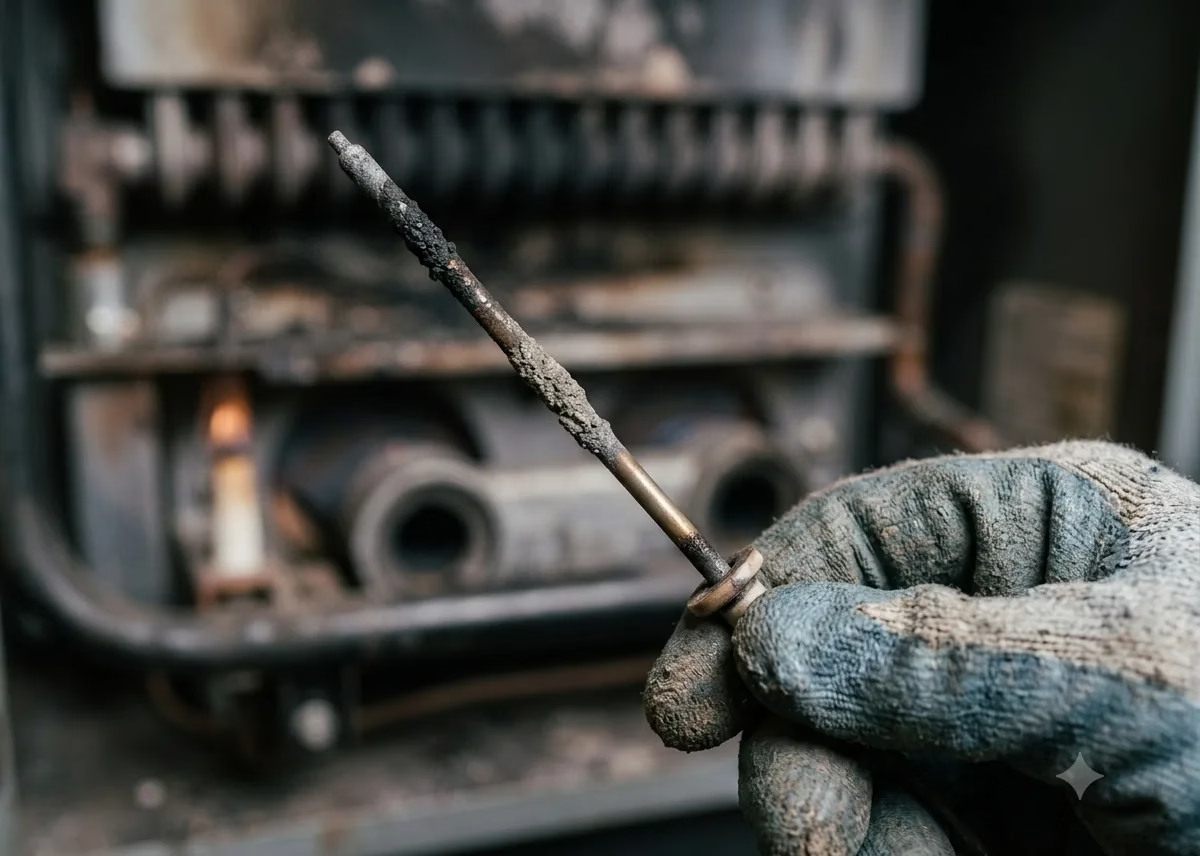
The flame sensor is behind more furnace no-heat calls than almost any other part — and cleaning it is often a free, five-minute fix. This thin metal rod confirms the burner has actually lit; when it gets coated in carbon, it can no longer sense the flame and shuts the gas off as a safety measure, usually within seconds of ignition. The result is a furnace that lights, runs briefly, then dies — over and over. Before you call for an expensive repair, this is the first thing to check, because the fix frequently costs nothing. Here is how the sensor works, how to know if it is your problem, and how to clean or replace it safely.
What the Flame Sensor Does
The flame sensor is a single metal rod that sits directly in the path of the burner flame. It uses a tiny electrical current (a process called flame rectification) to confirm the flame is present. This is a critical safety function: if the gas valve opened but the burner failed to light, unburned gas would build up dangerously. So when the sensor cannot detect a flame — whether because there genuinely is none, or because carbon buildup has insulated the rod so it cannot sense the flame that is there — it signals the control board to shut the gas valve within seconds. A dirty sensor produces a false “no flame” reading and shuts down a perfectly good burner.
Symptoms of a Dirty Flame Sensor
- The furnace lights, runs for a few seconds, then shuts off — repeatedly
- The burners ignite then die almost immediately
- The furnace tries several times, then locks out (often flashing an error code)
- Intermittent heat that fails more often as the sensor gets dirtier
This pattern — lights then dies in seconds — is the signature of a dirty flame sensor, and it is behind many cases of a furnace not turning on, blowing cold air, and short cycling.
How to Clean a Flame Sensor
- Turn off power to the furnace at the switch or breaker, and shut off the gas.
- Locate the sensor: a thin metal rod (often bent) at the burner assembly, with a single wire running to it. Do not confuse it with the two-pronged igniter.
- Remove it: usually one 1/4″ hex screw holds it. Note how it sits, then pull it out.
- Clean it: gently rub the metal rod with fine sandpaper, steel wool, or an emery cloth to remove carbon and oxidation. You are polishing, not grinding — do not use anything too abrasive.
- Wipe it clean with a dry cloth to remove residue and skin oils.
- Reinstall in the same position, restore gas and power, and test.
⚠️ Always cut power and gas before touching the burner assembly. The flame sensor is safe to handle once the furnace is off and cool.
When to Replace Instead of Clean
Cleaning fixes most flame sensor problems, but the rod does wear out. Replace it if cleaning only helps briefly before the problem returns, the rod is cracked or the porcelain base is chipped, or it is corroded beyond what polishing removes. A replacement flame sensor costs $10–$25 and installs the same way. It is good practice to replace it every few years as cheap insurance, especially as part of annual furnace maintenance.
If Cleaning Doesn’t Fix It
If a clean and a new sensor still do not hold the flame, the problem is elsewhere: a weak flame from a dirty burner, a bad ground connection, a failing control board, or a gas supply issue. Poor grounding is a common overlooked cause — the sensor relies on a solid ground to work. At that point, read the furnace’s error code (see our error code guide for Lennox as an example) and call a technician if it points to the board or gas valve.
How to Prevent It
Flame sensors get dirty naturally as a byproduct of combustion, but you can slow it down. Keep up with air filter changes (a clean burn produces less soot), and add flame sensor cleaning to your annual pre-season furnace checklist. A sensor cleaned once a year rarely causes a mid-winter shutdown — it is the neglected furnaces that fail on the coldest night.
FAQ
How do I know if my flame sensor is bad?
The classic sign is a furnace that lights then shuts off within a few seconds, repeatedly. If the burners ignite but die almost immediately and the furnace keeps retrying or locks out, a dirty or failed flame sensor is the most likely cause.
Can I clean a flame sensor myself?
Yes — it is one of the easiest furnace fixes. Turn off power and gas, remove the single screw holding the sensor, gently polish the metal rod with fine sandpaper, wipe it, and reinstall. It takes about five minutes and often restores heat for free.
How often should a flame sensor be cleaned?
Once a year is a good habit, ideally as part of annual furnace maintenance before the heating season. Homes with more dust or certain gas qualities may need it more often. Replace the sensor every few years.
Why does my flame sensor keep getting dirty?
Carbon buildup is a natural byproduct of combustion, but excessive or rapid fouling can point to a dirty burner, a filter that needs changing, or a combustion problem. If a freshly cleaned sensor fouls again within weeks, have a technician check the burner and combustion.
Sources: U.S. Department of Energy — Home Heating Systems · manufacturer documentation.