Last updated: July 2026 · Reviewed against Carrier, Goodman and Mitsubishi service documentation
Not sure if you even have a heat pump? See how to tell. Many heat pump problems have simple, DIY-fixable causes — a dirty filter, a tripped breaker, a blocked outdoor unit, or a thermostat setting. Others, like low refrigerant or a failed compressor, need a professional. This guide walks through how to diagnose and fix the common heat pump problems yourself, and shows you exactly where DIY ends and a technician is worth the call.
Start With These Quick Checks
- Thermostat: set to HEAT or COOL correctly, several degrees past room temp, fresh batteries, fan on AUTO.
- Air filter: replace it if dirty — the most common cause of poor performance and freezing.
- Breakers: check both the indoor air handler and outdoor unit breakers, plus the outdoor disconnect box.
- Outdoor unit: clear leaves, snow, and debris; keep 18+ inches of clearance around it.
- Vents: make sure supply and return registers are open and unobstructed.
These five checks resolve a large share of heat pump complaints before a technician is ever needed.
Common Problems and What They Mean
| Symptom | Likely cause | DIY or pro |
|---|---|---|
| Not heating | Thermostat, filter, defrost, or refrigerant | See not heating |
| Not cooling | Filter, frozen coil, or refrigerant | See not cooling |
| Iced-over outdoor unit | Defrost, drainage, or refrigerant | See frozen outside |
| Short cycling | Filter, thermostat, or oversized unit | DIY checks first |
| Outdoor unit won’t run | Breaker, capacitor, or contactor | Pro if breaker re-trips |
| Blowing warm in cool mode | Refrigerant or reversing valve | Pro |
What You Can Fix Yourself
DIY-friendly heat pump fixes include replacing the air filter, clearing the outdoor unit, resetting a tripped breaker, thawing an iced unit (never chip the ice), correcting thermostat settings, and straightening or cleaning around the coil. These cover the majority of “my heat pump is broken” situations and cost nothing but time.
What Needs a Professional
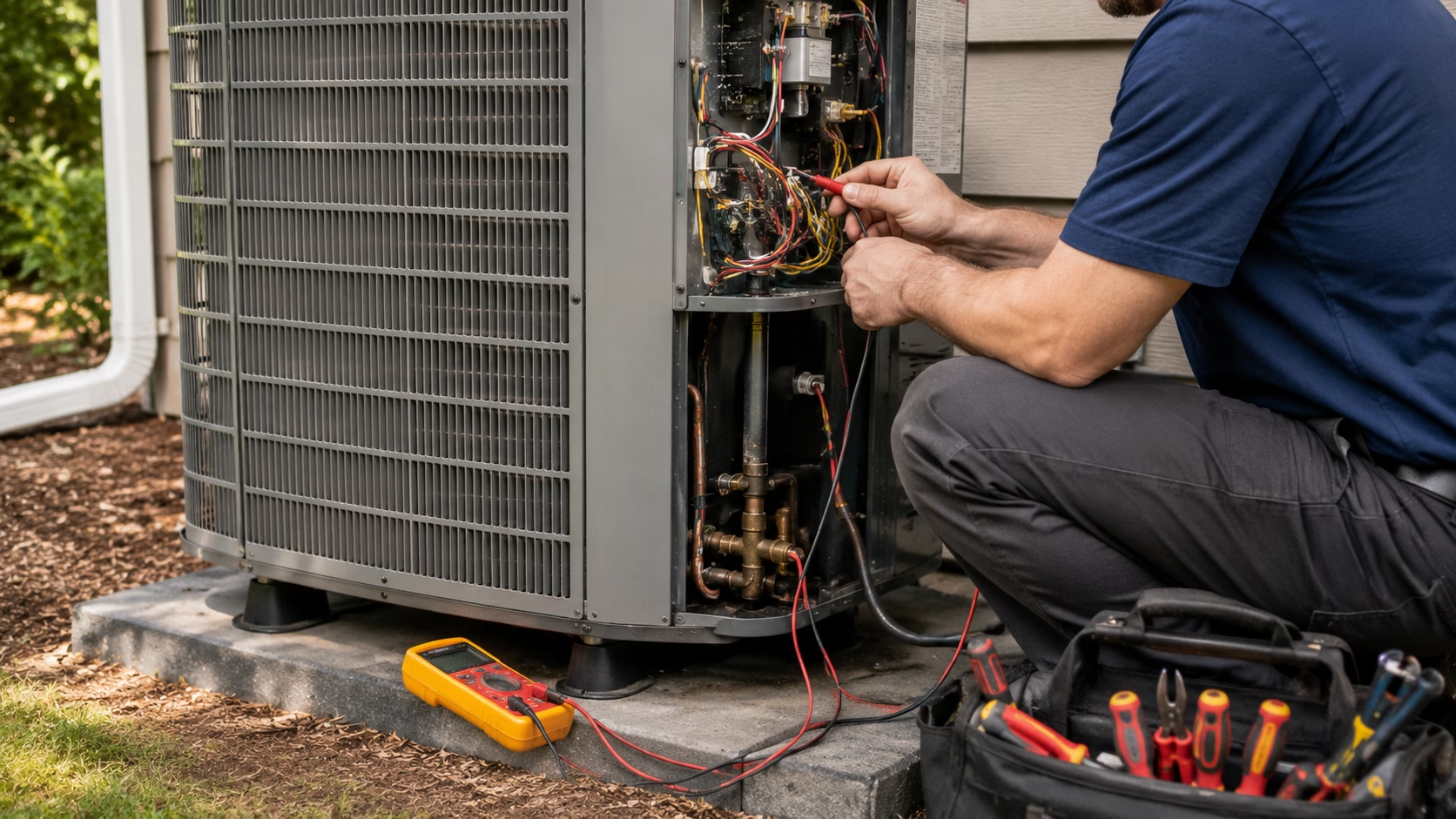
Call a licensed HVAC technician for anything involving refrigerant (low charge always means a leak to find and seal), a stuck reversing valve, a failed compressor, a bad capacitor or contactor, or repeated breaker trips. These require gauges, refrigerant certification, or electrical work that is unsafe to DIY. A diagnostic visit runs $90–$180; major repairs vary widely.
When Repair Is Not Worth It
If your heat pump is 12–15+ years old and faces a major repair like a compressor or coil replacement, replacement often makes more financial sense — see heat pump cost to compare. A younger unit with a minor fault is almost always worth repairing.
FAQ
How do I fix a heat pump that is not working?
Start with the five quick checks: thermostat, air filter, breakers, outdoor unit clearance, and vents. These resolve most problems. If it still fails and you suspect refrigerant, a reversing valve, or an electrical component, call a technician — those are not DIY repairs.
Why is my heat pump not working?
The most common causes are a dirty filter, a tripped breaker, a blocked or iced outdoor unit, or a thermostat setting. Less common but pro-level causes include low refrigerant from a leak, a stuck reversing valve, or a failed capacitor or compressor.
Can I fix a heat pump myself?
You can handle filters, clearing the outdoor unit, resetting breakers, thawing ice, and thermostat settings. Anything involving refrigerant, the reversing valve, the compressor, or electrical components should be left to a licensed HVAC technician for safety and legal reasons.
Sources: U.S. Department of Energy — Heat Pump Systems · manufacturer service manuals (Carrier, Goodman, Mitsubishi).