Last updated: July 2026 · Reviewed against A.O. Smith, Rheem and Bradford White service documentation
The anode rod is the single most important part for extending your water heater’s life — and the most overlooked. This “sacrificial” metal rod is engineered to corrode instead of your steel tank, so as long as it has metal left, the tank is protected. Once it is used up, the tank itself begins to rust from the inside, the leading cause of water heater failure. Replacing a $20–$40 anode rod every few years can literally double the life of your tank. Here is how to check it, when to replace it, which type to buy, and how to do the job yourself.
What an Anode Rod Does
Inside every tank water heater is a long metal rod — usually magnesium or aluminum wrapped around a steel core wire — threaded into the top of the tank. Through galvanic corrosion, this rod attracts the corrosive minerals in the water and corrodes in place of the steel tank lining. That is why it is a sacrificial anode: it sacrifices itself so the tank does not rust. It is the same process that corrodes boat propellers, harnessed here to protect your tank. Once the rod is consumed and only the bare steel core remains, the tank begins to corrode — leading to rust-colored water and, eventually, a leak.
When to Replace the Anode Rod
Inspect the rod every 2–3 years and replace it when heavily corroded. Signs to watch for:
- The tank is 3+ years old and the rod has never been checked
- A rotten-egg (sulfur) smell in the hot water
- Rust-colored or discolored hot water
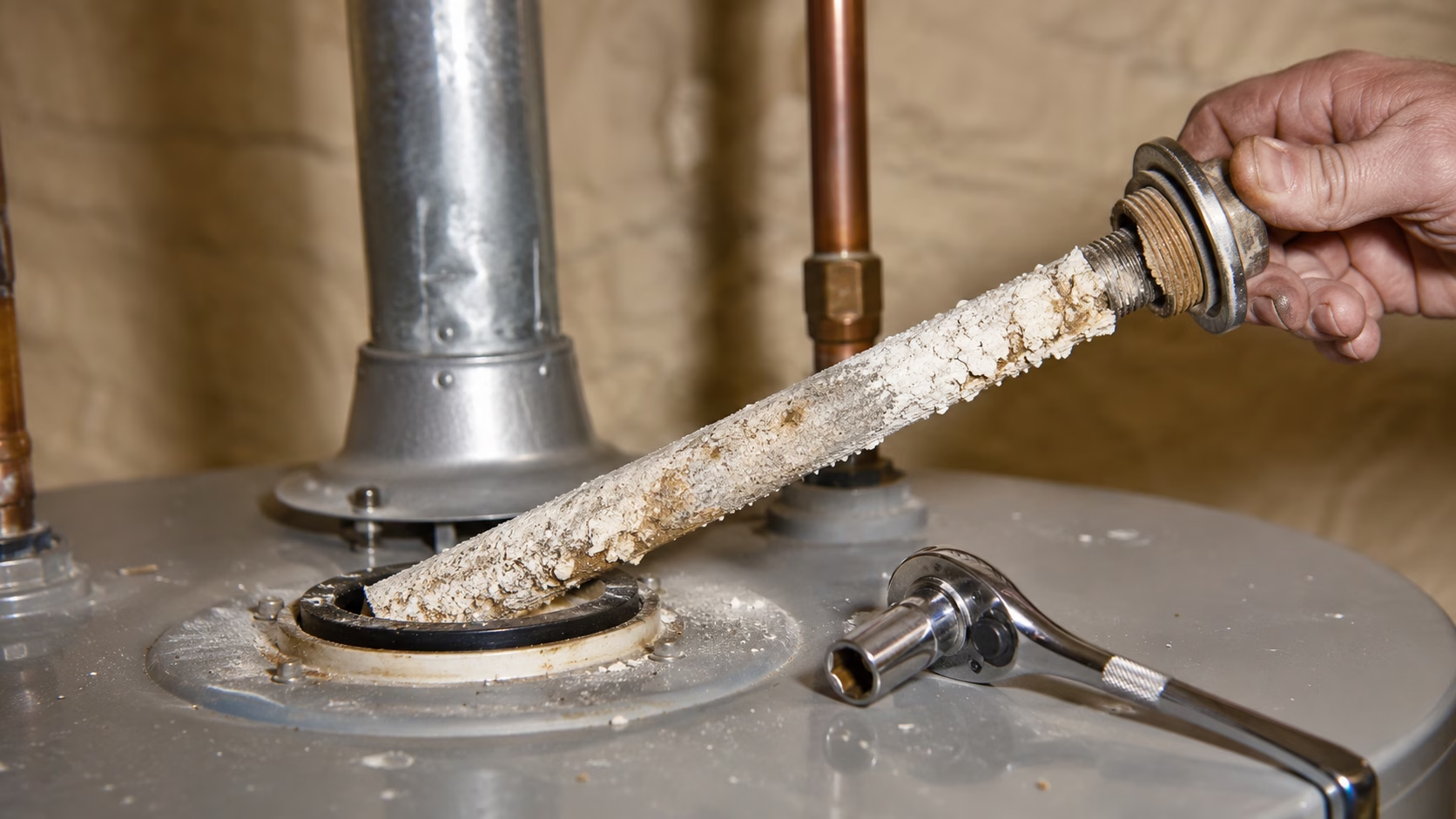
- On inspection, the rod is under half an inch thick or the steel core wire is exposed
In hard water areas, rods deplete faster — check yearly. A rod replaced on schedule is the cheapest insurance against a leaking tank, and it pairs naturally with your annual tank flush.
How to Check and Replace an Anode Rod
- Turn off power/gas and the cold water supply — see how to turn off your water heater.
- Drain a few gallons from the tank to drop the water level below the top.
- Find the rod’s hex head on top of the tank, sometimes under a plastic cap. Some rods exit through the hot water outlet (combo rods).
- Use a 1 1/16″ socket and a breaker bar. Factory rods are torqued very tight, so you may need leverage and a helper to steady the tank.
- Unscrew and remove the old rod. If it is thin, crusty, or down to the bare core wire, it is due.
- If overhead clearance is tight, use a flexible segmented replacement rod that bends as it goes in.
- Wrap the new rod’s threads with PTFE tape, screw it in, and tighten firmly.
- Close the drain, refill the tank (open a hot tap to release air), check for leaks, then restore power/gas once full.
The rod costs $20–$40. The only tricky parts are breaking the tight factory torque and overhead clearance — flexible segmented rods solve the clearance problem.
Magnesium vs. Aluminum vs. Powered
- Magnesium: best protection and the standard choice. Can react with sulfur bacteria to cause a rotten-egg smell in some water.
- Aluminum: lasts longer in hard water and resists the smell, but slightly less protective.
- Powered (electronic): a titanium rod that never depletes — ideal for smelly or very hard water. Higher upfront cost ($60–$150) but no future replacement.
If you get a persistent rotten-egg smell, switching from magnesium to aluminum or a powered rod usually solves it.
FAQ
How often should you replace a water heater anode rod?
Inspect it every 2–3 years and replace when heavily corroded or under half an inch thick. In hard water, check yearly. Regular replacement can double the tank’s lifespan.
What happens if you don’t replace the anode rod?
Once consumed, the corrosive elements attack the steel tank instead. The tank rusts from the inside and eventually leaks. A $30 rod prevents a $1,500+ replacement.
Why does my hot water smell like rotten eggs?
Usually a magnesium anode rod reacting with sulfur bacteria. Switching to an aluminum or powered rod typically eliminates the smell, as does disinfecting the tank.
Can I replace the anode rod myself?
Yes. The main challenges are breaking the tight factory torque (use a breaker bar) and overhead clearance (use a flexible rod). Budget about an hour plus a $20–$40 rod.
Sources: U.S. Department of Energy — Water Heating · manufacturer service documentation.