Last updated: July 2026 · Reviewed against A.O. Smith, Rheem and Bradford White service documentation
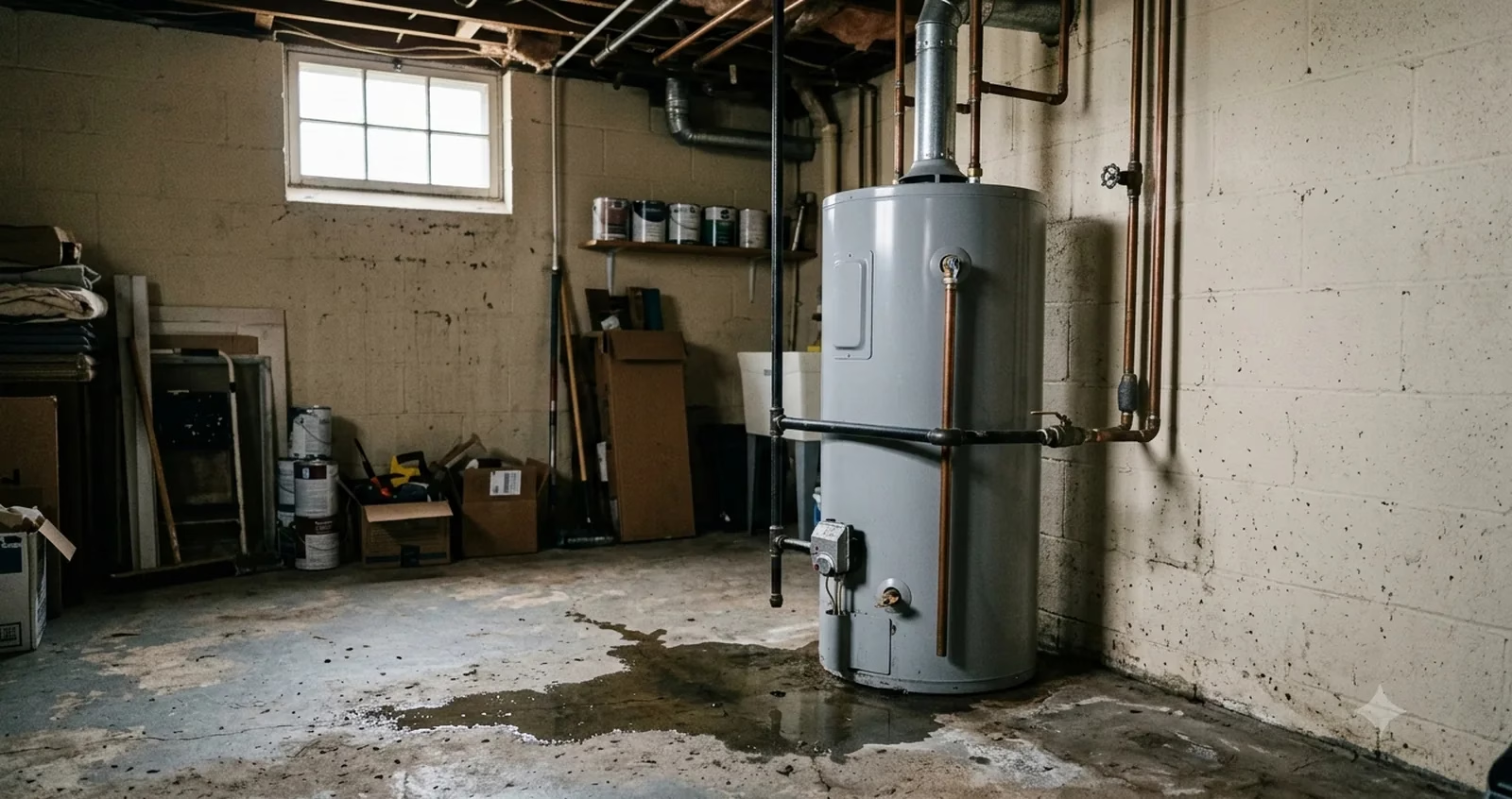
A leaking water heater has five likely sources, and where the water is coming from tells you how serious it is. A leak from the drain valve or a connection is a cheap fix. A leak from the T&P relief valve points to a pressure problem. But a leak from the tank body itself means the tank has corroded through and needs replacing. Here is how to find your leak’s source in a few minutes and what each one means.
First: Shut It Down
Before diagnosing, turn off the power or gas and close the cold-water supply valve to stop the leak worsening — see how to turn off your water heater. Then dry everything completely so you can pinpoint where fresh water appears.
⚠️ If you smell gas, leave the house and call your gas utility from outside before doing anything else.
Find the Source: Top or Bottom?
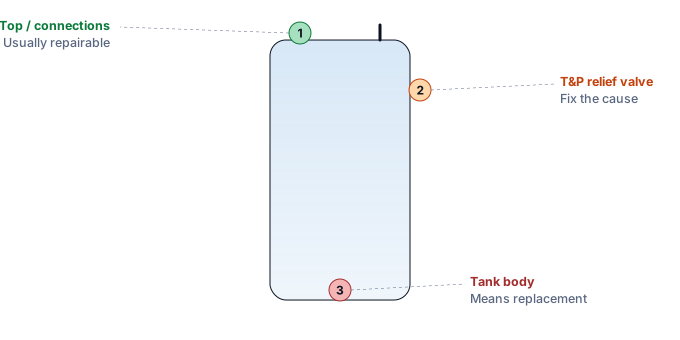
Water runs downhill, so trace it to its highest point. The source determines everything:
| Where it leaks | Likely cause | Severity |
|---|---|---|
| Top of tank | Loose connections, corroded nipples, T&P valve | Usually repairable |
| Side (discharge tube) | T&P relief valve releasing | Fix the cause, not the valve |
| Base / drain valve | Drain valve, element gasket, or condensation | Often a cheap fix |
| Tank body itself | Internal corrosion | Replacement needed |
Leaks From the Top
A leak at the top usually comes from loose cold/hot water connections, corroded inlet/outlet nipples, or the T&P valve. These are almost always repairable and rarely mean replacement. Full walkthrough: water heater leaking from the top.
Leaks From the Bottom
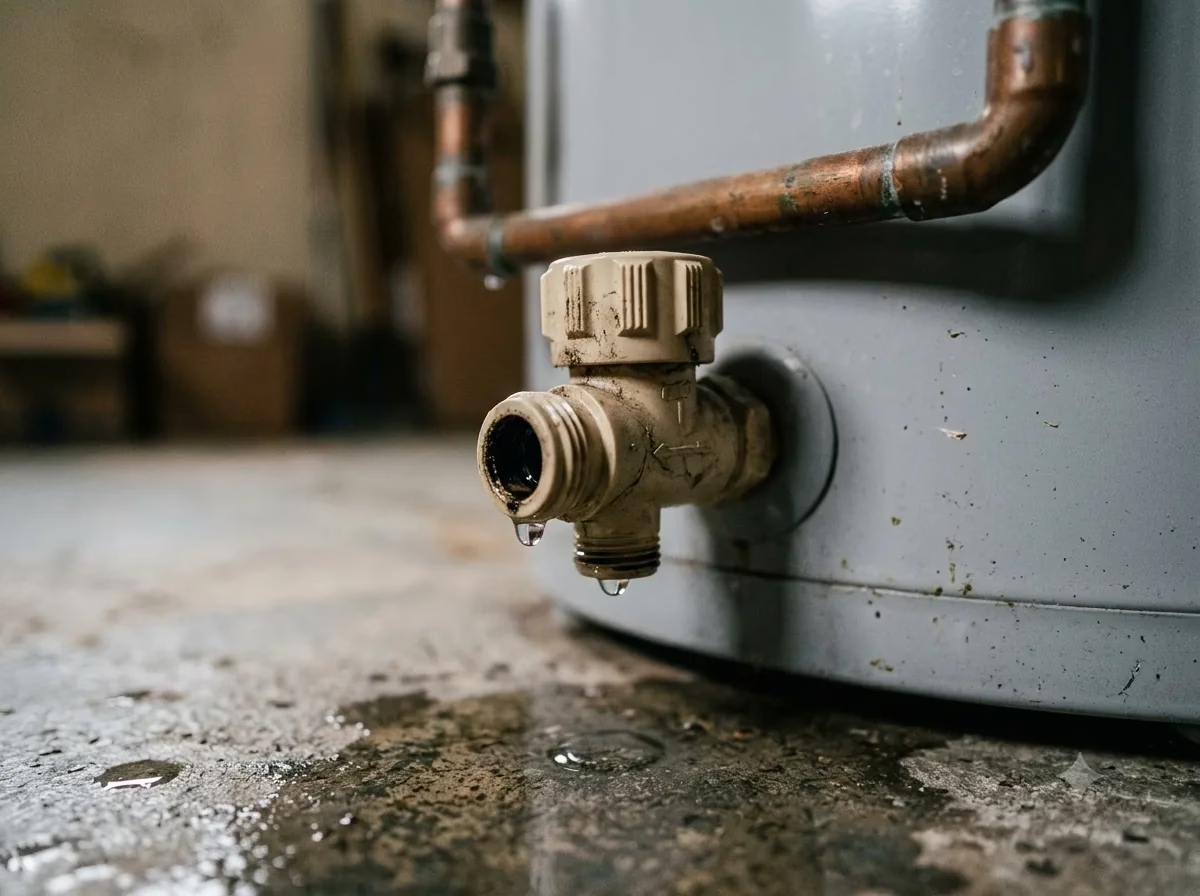
A leak at the base is the one to diagnose carefully, because it ranges from a $10 drain valve to a dead tank. The most common fixable cause is the drain valve; the most serious is tank corrosion. Our full guide walks through all five base-leak causes: water heater leaking from the bottom.
Leaks From the Relief Valve
If water comes from the valve on the top or side with a tube running down, that is the T&P relief valve doing its job — responding to excess pressure or temperature. Never cap it; fix the underlying cause. See why your relief valve is leaking.
When It Means Replacement
If the tank body itself is weeping — especially with rusty water — the steel has corroded through and no repair is safe. This is most likely when the unit is 10+ years old. A standard 40–50 gallon replacement runs $1,200–$2,500 installed in 2026 — see water heater replacement cost. If your unit is under 6 years old, check the serial number — the tank may still be under warranty.
FAQ
Why is my water heater leaking?
The five common causes are a loose or corroded connection, the drain valve, a heating element gasket, the T&P relief valve, or the tank body corroding through. Trace the water to its highest point: top-of-tank leaks are usually repairable, while a leak from the tank body itself means replacement.
Is a leaking water heater dangerous?
A slow drip is not an immediate emergency but should be addressed quickly — water near gas or electrical components is a hazard, and a corroded tank can eventually burst, releasing 40–50 gallons. Shut off power and water and diagnose promptly.
Can a leaking water heater be repaired?
It depends on the source. Leaks from valves, connections, and gaskets are repairable, often cheaply. A leak from the tank body itself cannot be safely repaired — a pressurized steel tank that has corroded through must be replaced.
Sources: U.S. Department of Energy — Water Heating · manufacturer service documentation (A.O. Smith, Rheem, Bradford White).