Last updated: July 2026 · Reviewed against A.O. Smith, Rheem and Bradford White service documentation
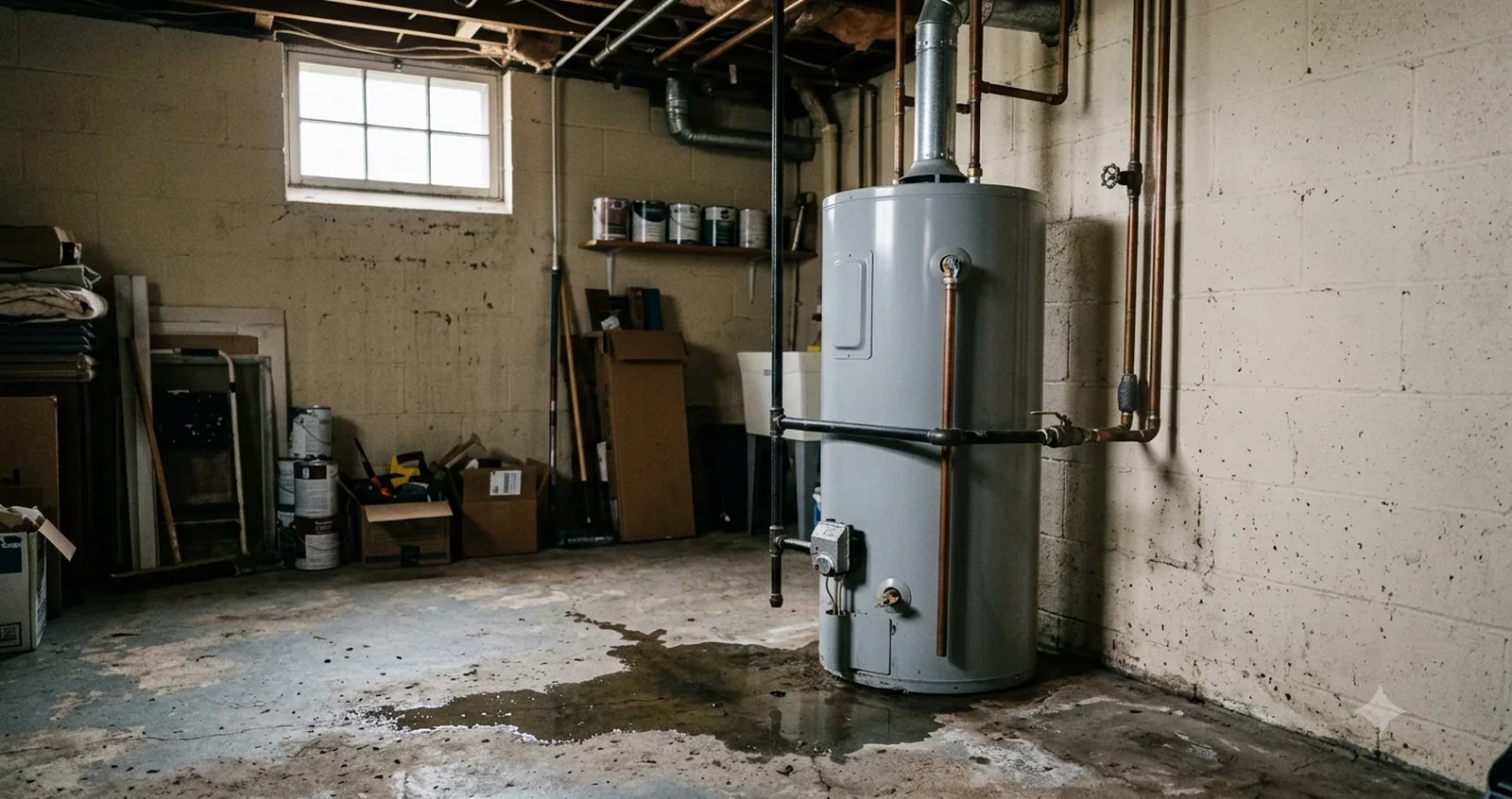
Not sure where your leak is coming from? Start with our overview of why a water heater leaks. A water heater leaking from the bottom is usually caused by one of three things: a loose or failed drain valve, water traveling down from the temperature & pressure (T&P) relief valve, or — the serious one — internal tank corrosion. The first two are cheap fixes ($0–$150). A leaking tank itself cannot be repaired and means replacement.
Here is how to tell which one you are dealing with in the next five minutes, what each fix costs, and when to stop DIY-ing and shut the unit down.
First: Make It Safe (2 Minutes)
Before diagnosing anything, cut power and water so a drip does not become a flood:
- Electric heater: switch off the “Water Heater” breaker at your electrical panel.
- Gas heater: turn the control dial to OFF (or Pilot if you plan to relight soon).
- Water: close the cold-water shutoff valve on the pipe entering the top of the tank (full shut-off steps here). If it is stuck, use your home’s main shutoff.
⚠️ If you smell gas (rotten-egg odor), do not flip any switches. Leave the house and call your gas utility from outside. Diagnosis can wait; gas leaks cannot.
Quick Diagnosis: Where Is the Water Actually Coming From?
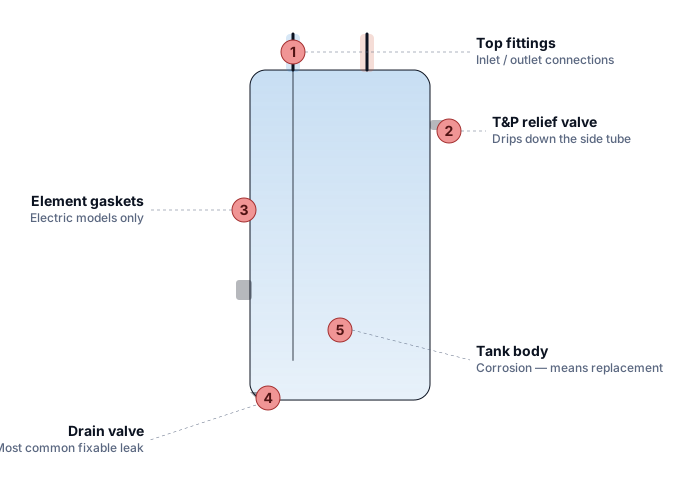
If the water is coming from higher up, check our guide to a water heater leaking from the top. Water obeys gravity — a puddle at the bottom does not always mean the leak starts at the bottom. Dry the tank completely with a towel, then check these five points from top to bottom:
| Leak source | How to confirm | Severity | Typical fix cost (2026) |
|---|---|---|---|
| Inlet/outlet fittings (top) | Moisture at the pipe connections on top | Low | $0–$20 DIY (tighten/re-tape) |
| T&P relief valve / discharge tube | Drips from the tube running down the side | Medium | $15–$30 DIY · $150–$300 pro |
| Heating element gaskets (electric only) | Moisture behind the side access panels | Medium | $20–$40 DIY · $200–$300 pro |
| Drain valve | Drips from the spigot at the base | Low | $10–$25 DIY · $100–$200 pro |
| Tank body (seams/underside) | Steady seep from the jacket itself, rusty water | Replace unit | $1,200–$2,500 installed |
Cause 1: A Leaking Drain Valve (Most Common Fixable Cause)
The drain valve — the spigot at the base used for flushing sediment — is the most common repairable source of a bottom leak. Most residential units ship with a plastic valve that turns brittle after 8–10 years, and its washer or threads simply give out.
Confirm it: dry the valve, wrap a paper towel around it, wait 30 minutes. A damp towel = drain valve.
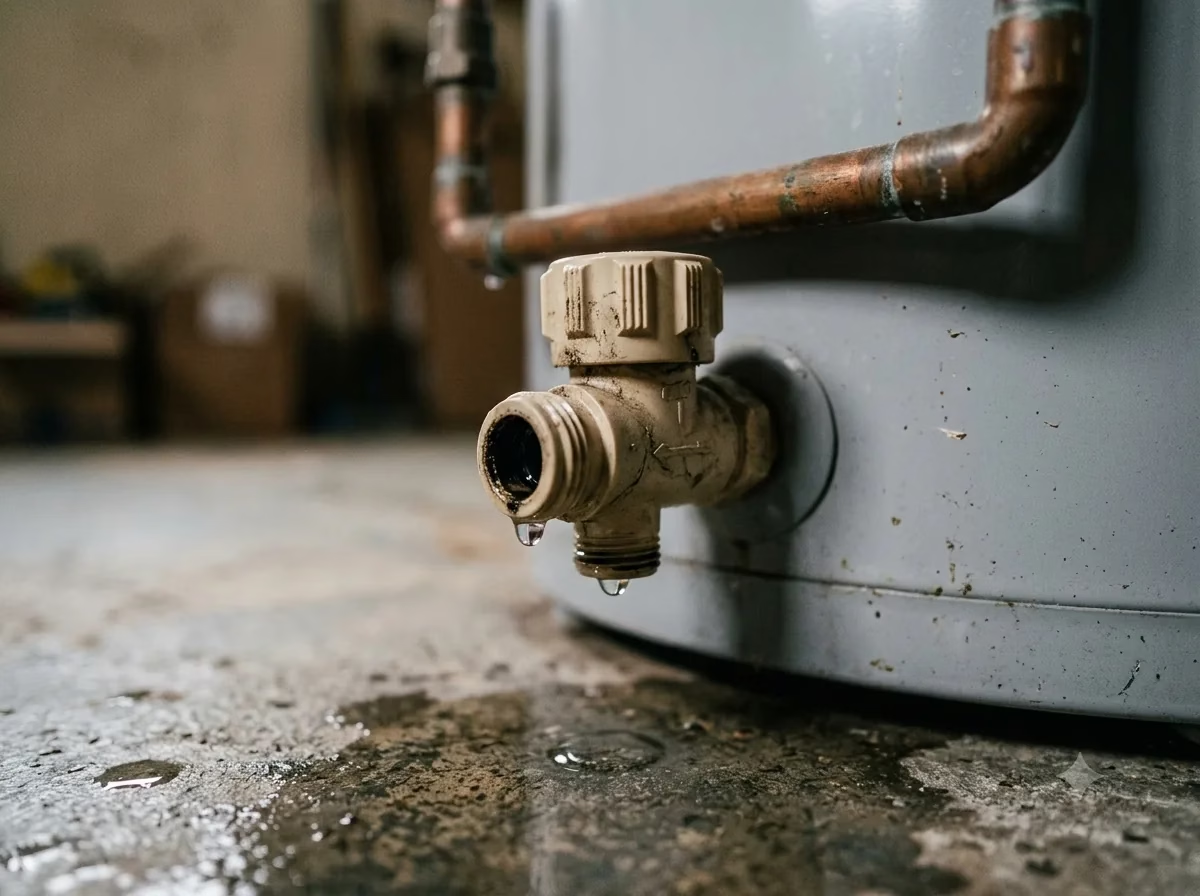
Fix it: try snugging the valve a quarter-turn clockwise — do not force it, overtightening cracks plastic valves. If it still drips, replace it: shut off power/water, drain the tank below valve level, unscrew the old valve, wrap the new valve’s threads with PTFE tape, and screw in a brass replacement (about $10–$15 — skip plastic this time; see our drain valve repair guide). A temporary trick while you wait for parts: cap the valve outlet with a garden-hose cap ($3).
Cause 2: T&P Relief Valve Discharge Pooling at the Base
The temperature & pressure relief valve sits on the top or side, but its discharge tube ends near the floor — so when it releases water, the puddle shows up at the bottom and gets misdiagnosed as tank failure. See why your relief valve is leaking.
If the discharge tube is wet, your problem is not the tank; it is either a worn valve or excess pressure/temperature in the system. Test: lift the valve’s lever briefly — it should snap back and stop flowing. If it keeps dripping afterward, replace the valve ($15–$30). If a new valve still weeps, your home may need a thermal expansion tank — that is a pressure problem, not a valve problem.
Cause 3: Heating Element Gaskets (Electric Water Heaters)
On electric units, two heating elements screw into the side of the tank behind metal access panels, sealed by rubber gaskets. After 10+ years these gaskets harden, and water seeps out, runs down inside the outer jacket, and drips from the bottom seam — looking exactly like tank failure.
Confirm it: power OFF at the breaker, remove the two side panels, pull back the insulation, and check for moisture around each element. A gasket kit costs under $10; replacing it requires draining the tank and an element wrench.
Cause 4: Condensation (The False Alarm)
A gas water heater refilling with cold water in a humid basement can sweat enough to form a small puddle. It is harmless. Confirm it: dry everything, run hot water for 10 minutes, wait. Condensation reappears as a fine film all over the tank and vanishes once the water heats; a real leak reappears in one spot and grows.
Cause 5: Internal Tank Corrosion — When It Is Time to Replace
If the jacket itself is weeping — especially with rust-tinted water — the glass lining inside has failed and the steel tank has corroded through. No sealant, weld or patch safely fixes a pressurized tank. This is the end-of-life scenario, and it is the most likely diagnosis when: the unit is 10+ years old (check the serial number — most tanks last 8–12 years), the leak returns after you dry it with no wet component above it, or you hear rumbling/popping (sediment buildup, the usual killer).
A standard 40–50 gallon replacement runs $1,200–$2,500 installed in most US markets in 2026 (tank + labor + code items like expansion tanks or pans). Anything quoted far below that usually excludes permits or haul-away.
Worth knowing: if your heater is under 6 years old, the tank is almost certainly still under manufacturer warranty — the tank itself, not labor. Look up your serial number before paying for anything.
Repair or Replace? The 50% Rule
If the repair quote exceeds 50% of a new installed unit, or the heater is past year 8, put the money toward replacement. A $300 valve-and-labor repair on an 11-year-old tank is buying months, not years.
When to Call a Plumber
Call a pro rather than DIY if: the leak source is the tank body (replacement quote), you are not comfortable draining a tank, the T&P valve keeps discharging (pressure issues can be dangerous), or gas connections are involved. Emergency service for an actively flooding heater typically runs $150–$400 for the visit plus parts.
FAQ
Is a water heater leaking from the bottom an emergency?
Treat it as urgent, not panic. Shut off power and the cold-water supply, then diagnose. The exception: water gushing (not dripping) or any gas smell — shut everything down and call a plumber immediately. A slow drip will not explode, but it will quietly ruin flooring within days.
Can I still use hot water while it leaks?
If the leak is a minor drip from the drain valve or a fitting, yes, short-term. If it is coming from the tank body, stop using it and drain it — the leak only grows, and a burst tank releases 40–50 gallons at once.
How long will a leaking water heater last?
A leaking component (valve, gasket) can be fixed and the heater can run for years. A leaking tank is terminal: it may drip for weeks or fail suddenly. Nobody can predict which, which is why plumbers replace rather than monitor.
Why is my water heater leaking from the bottom element?
On electric models, that is the lower heating element’s gasket. Turn off the breaker, drain below the element, unscrew it with an element wrench, and replace the $5 gasket — or the element itself if it is scaled up.
Does homeowners insurance cover a leaking water heater?
Generally, insurance covers the sudden water damage to floors and walls, but not the heater itself, which is considered wear and tear. Gradual leaks you ignored are commonly denied. Document the failure with photos and act fast.
Sources: U.S. Department of Energy — Water Heating · manufacturer service documentation (A.O. Smith, Rheem, Bradford White).