Last updated: July 2026 · Reviewed against Carrier, Goodman and Trane operating instructions
Most furnaces built in the last 25 years do not have a standing pilot light — they use an electronic igniter instead. If you have an older furnace with an actual pilot, or a gas wall/floor furnace, here is how to find and light it safely. And if your furnace has no pilot to light, we will show you what to do instead.
Does Your Furnace Even Have a Pilot Light?
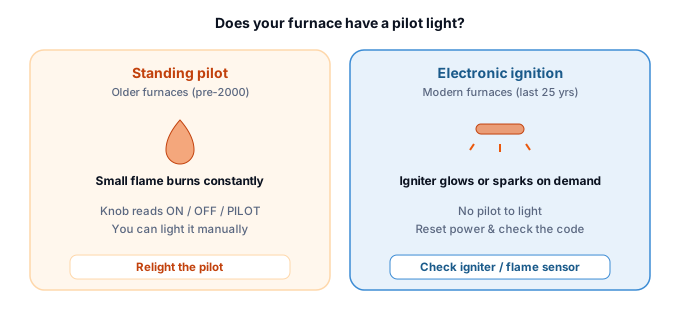
First, determine what you have. Older furnaces (pre-2000) and many gas wall/floor furnaces have a standing pilot — a small flame that burns continuously. Modern furnaces use one of two electronic ignition systems instead: a hot surface igniter (a glowing element) or an intermittent pilot (a spark that lights a pilot only when needed). If your furnace was made in the last 25 years, it almost certainly has no pilot to light — skip to the section below on electronic ignition.
Where Is the Pilot Light?
On furnaces that have one, the pilot is inside the burner compartment, behind the front access panel near the gas valve. You are looking for a small assembly with a gas control knob labeled ON / OFF / PILOT. There is usually a small window or opening to see the pilot flame.
How to Light a Furnace Pilot Light
- Turn the gas control knob to OFF and wait 5 minutes for any gas to clear.
- Turn the knob to PILOT.
- Press and hold the knob down (this feeds gas to the pilot only).
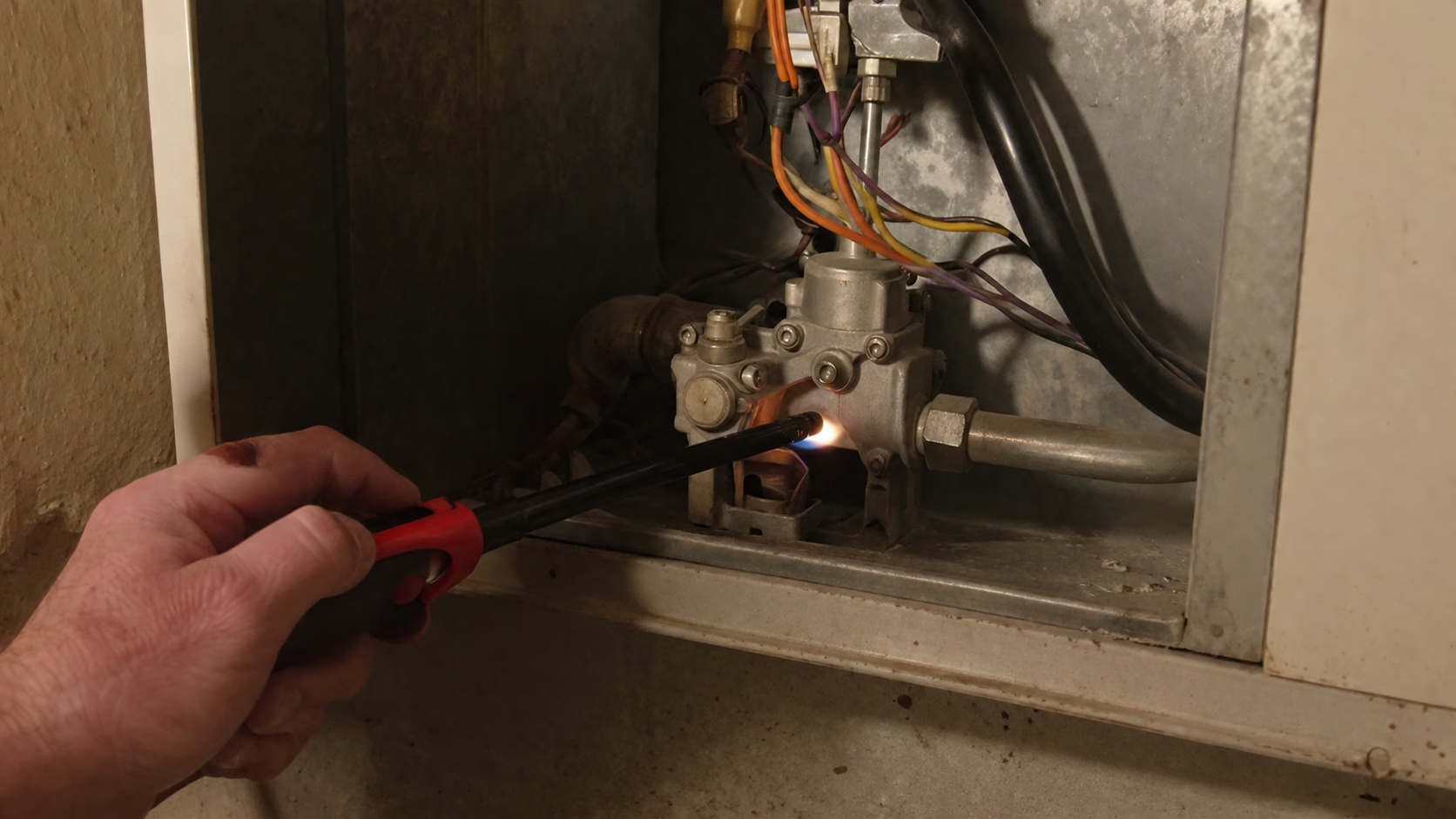
- While holding, press the igniter button repeatedly — or hold a long lighter to the pilot opening — until the pilot flame lights.
- Keep holding the knob down for 30–60 seconds after it lights, then release. The pilot should stay lit.
- Turn the knob to ON. The main burners should fire on the next call for heat.
⚠️ If you smell a strong gas odor, stop. Do not try to light it. Leave the house and call your gas utility from outside. Only light the pilot if there is no significant gas smell.
Pilot Won’t Stay Lit?
If the pilot lights while you hold the knob but dies when you release it, the cause is almost always a dirty or failed thermocouple — the safety sensor that must feel the pilot flame to keep the gas on. Cleaning or replacing it (a $10–$20 part) usually fixes it. Other causes: a clogged pilot orifice producing a weak flame, or a draft blowing it out.
If Your Furnace Has Electronic Ignition
Modern furnaces have nothing to light manually. If yours will not fire, do not go looking for a pilot — instead, cycle the power (off 30 seconds, back on) to reset the board, check the thermostat and filter, and read any error code. The hot surface igniter or flame sensor may need attention; see our guides on the furnace flame sensor and furnace not turning on.
FAQ
Do all furnaces have a pilot light?
No. Furnaces built in roughly the last 25 years use electronic ignition (a hot surface igniter or intermittent spark) instead of a standing pilot. Only older furnaces and many gas wall/floor furnaces have a pilot light you can manually light.
How do I know if my furnace has a pilot light?
Look for a gas control knob labeled ON/OFF/PILOT inside the burner compartment. If it has a PILOT setting and a small continuous flame, it has a standing pilot. If instead you see a glowing element at ignition or hear a spark and click, it has electronic ignition and no pilot to light.
Why won’t my furnace pilot light stay lit?
The most common reason is a dirty or failed thermocouple that no longer senses the pilot flame and shuts off the gas. A clogged pilot orifice or a draft can also be to blame. Cleaning or replacing the thermocouple usually solves it.
Sources: U.S. Department of Energy — Home Heating Systems · manufacturer service manuals (Carrier, Goodman, Trane).